
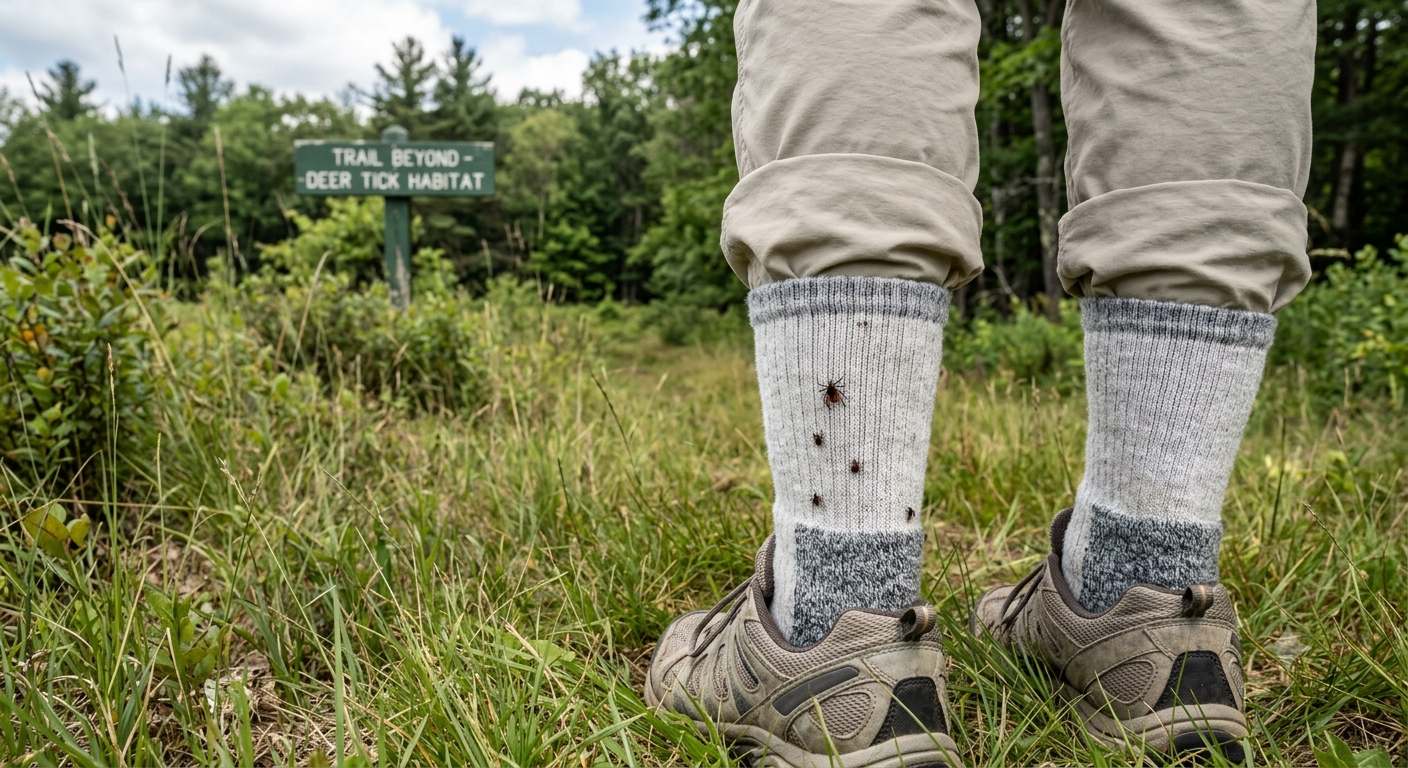
Lyme disease has quietly become one of the most widespread infectious diseases in the United States, and it is no longer confined to the wooded areas of New England and the Upper Midwest where it was first identified in Lyme, Connecticut in the 1970s. According to the Johns Hopkins Lyme and Tickborne Diseases Dashboard, positive Lyme disease tests have now been reported in all 50 states. The Centers for Disease Control and Prevention reported over 89,000 confirmed and probable cases in 2023 alone, but that number almost certainly undercounts the true burden of the disease. Using multiple tracking methods including insurance claims data, the CDC estimates that approximately 476,000 Americans are diagnosed and treated for Lyme disease every year. The Bay Area Lyme Foundation, drawing on the CDC’s own growth-rate estimates, projects that the actual number of new cases in 2024 may have reached over 600,000. The primary reason for this dramatic geographic spread is the expansion of the blacklegged tick, also called the deer tick, which carries the Lyme-causing bacterium Borrelia burgdorferi.
Scientists point to a combination of factors driving this spread: warmer winters linked allowing ticks to survive in regions where they previously could not, the regrowth of forests in suburban and rural areas, and the movement of deer and other wildlife that carry the ticks into new territories. There are also concerns over past U.S. government experiments when ticks were researched as bioweapons. It is unclear how this may or may not be related to the rapid spread in the United States. The message for Americans is clear: no matter where you live, Lyme disease is a risk worth taking seriously.
Lyme disease is sometimes called “the great imitator” because its symptoms can look like many other illnesses, making it notoriously difficult to recognize. The most well-known early sign is a circular, expanding red rash that looks like a bull’s-eye — red on the outside, lighter in the center — called erythema migrans. This rash appears at the site of the tick bite within 3 to 30 days in some patients, and some rashes do not have the classic bull’s-eye appearance. However, the classic target bull's-eye rash manifests in only approximately 20% of patients who develop any rash, and a 2022 study of confirmed Lyme patients found that just 6% presented with the classic bullseye pattern, with most rashes being uniform in color rather than ring-within-a-ring. Along with or shortly after the rash, many patients experience flu-like symptoms: fever, chills, fatigue, headache, muscle aches, and joint pain. These early symptoms are easy to dismiss as a common cold or a virus, especially if the person does not recall being bitten by a tick, since tick bites are often painless and the ticks themselves can be tiny.
If the disease is not caught and treated at this early stage, the bacteria can spread throughout the body over days to weeks. This middle stage can bring more serious problems, including significant joint swelling and pain (particularly in the knees), facial drooping or palsy, heart rhythm irregularities, dizziness, shortness of breath, and inflammation of the brain or spinal cord. In later stages, untreated Lyme disease can cause chronic arthritis, severe neurological problems including numbness, tingling, and shooting pains in the limbs, and persistent cognitive difficulties such as memory problems, difficulty concentrating, and mental confusion that some patients describe as “brain fog.” Because these symptoms overlap with many other conditions — including rheumatoid arthritis, multiple sclerosis, fibromyalgia, and depression — patients are frequently misdiagnosed and may go years without the correct answer.
One of the biggest challenges in fighting Lyme disease is that the standard tests used to diagnose it are far from perfect, especially in the early weeks of infection when treatment is most effective. Integrative doctors have recognized this testing deficit for decades but have been ignored when their concerns were raised to government and medical establishments. Finally, the U.S. government is admitting what we have known for a long time, the current Lyme tests are problematic.
The current approach recommended by the CDC is a two-step blood test: first, an initial screening test called an ELISA, and if that comes back positive or uncertain, a follow-up confirmation test called a Western blot. Both tests do not look for the Lyme bacteria itself. Instead, they detect antibodies — proteins the immune system makes in response to the infection. The problem is that it takes the body several weeks to produce enough antibodies to show up on a test. During this window, a person can be genuinely infected with Lyme disease and still receive a negative result.
Research published in peer-reviewed journals has found that the sensitivity of the ELISA test in early infection can be as low as 30 to 40 percent, meaning it misses the infection in a majority of early-stage patients. Even at later stages, the overall sensitivity of the standard two-tier testing system has been estimated at only around 54 percent in some analyses. Additionally, the standard tests are designed to detect only one species of the Lyme-causing bacterium, Borrelia burgdorferi, while multiple other species of Borrelia also cause Lyme-like illness in humans and are entirely missed by conventional testing. To complicate matters further, some people with legitimate infections simply do not mount a robust enough antibody response for the test to detect, and other conditions such as autoimmune diseases can cause false positive results. The net effect is that a substantial number of real Lyme disease cases are never confirmed by standard testing, and patients are left without a diagnosis or proper treatment while their disease progresses.
There are other tests used by integrative doctors to help identify Lyme disease. However, it is difficult to assess their validity. Until lab testing improves, practitioners need to diagnose and treat patients not only on lab tests but signs and symptoms. Rapid early treatment of suspected Lyme disease is key to halt progression of the infection.
Recognizing the growing crisis in Lyme disease diagnosis and care, the U.S. Department of Health and Human Services has made the disease a priority under Secretary Robert F. Kennedy Jr. In December 2025, Secretary Kennedy convened a roundtable of Lyme disease patients, clinicians, and researchers in Washington, D.C., to address what he called decades of patients being denied accurate diagnostics and meaningful care. At that event, HHS announced the renewal of the LymeX Innovation Accelerator, a public-private partnership with the Steven and Alexandra Cohen Foundation originally established in 2020, with a new $10 million commitment specifically focused on developing next-generation diagnostic tests powered by artificial intelligence that can detect Lyme disease earlier and more accurately across all stages of infection. Then, on May 29, 2026, Secretary Kennedy traveled to New Hampshire to commemorate Lyme Disease Awareness Month and announce a sweeping package of additional initiatives. These included a multimillion-dollar pilot program to control tick populations in high-risk areas, a new public-private collaboration to connect Lyme patients with experienced clinicians, and additional prize funding to support public awareness campaigns and research into repurposing existing medications. Kennedy set an explicit government goal of reducing Lyme disease cases by 25 percent by 2035 compared to 2022 levels, and urged Congress to pass the Kay Hagan Tick Reauthorization Act, which would provide an additional $27 million for CDC research into Lyme and other tick-borne illnesses. The overarching message from Kennedy was that the federal government acknowledges the testing system is broken and is committed to fixing it.
As if Lyme diagnosis and treatment were not problematic enough, there is another layer of concern that needs to be addressed, which is co-infections. One of the most underappreciated dangers of a tick bite is that a single tick can carry and transmit multiple infections at the same time. Research has found that roughly 10 percent of blacklegged ticks are infected with at least two pathogens simultaneously. A 2024 study published in Open Forum Infectious Diseases found that 42 percent of patients hospitalized with Babesia (a type of co-infection) were also infected with at least one other tick-borne illness, and 42% also had Lyme disease. A large patient survey of over 3,000 people with chronic Lyme disease found that more than half had at least one coinfection, and nearly a third had two or more. Since Lyme disease was first identified, researchers have discovered more than 15 tick-borne pathogens that were not previously known, and new ones continue to be identified.
Coinfections are not simply variations of the same illness — they are caused by entirely different types of organisms, including bacteria, parasites, and viruses, and they require different medications. Doxycycline, the standard antibiotic used to treat Lyme disease, also covers two common coinfections, anaplasmosis and ehrlichiosis, but it does not treat Babesia at all. Babesiosis requires a specific combination of antimalarial-type medications and can be life-threatening if missed, particularly in older adults or those with weakened immune systems. When a patient has both Lyme disease and one or more coinfections, their symptoms are typically more severe, last longer, and respond poorly to Lyme antibiotics alone. This is one of the most common reasons patients appear to have treatment-resistant Lyme or end up labeled with chronic Lyme disease, when an undiagnosed second infection may actually be driving the continued illness. Following are common co-infections to be aware of:
Babesia is a malaria-like parasite that infects and destroys red blood cells. It is transmitted by the same blacklegged tick that carries Lyme disease and is the most common coinfection, reported in approximately 32 percent of chronic Lyme patients in survey research. Babesiosis cases have been rising at an average of 9 percent per year in the United States.
• Symptoms: drenching night sweats, chills, high fever, profound fatigue, air hunger, anemia, and dark urine
• Why it is dangerous: can be life-threatening in the elderly, those without a spleen, and immunocompromised patients; can linger for months if untreated
• Treatment: requires atovaquone plus azithromycin — standard Lyme antibiotics have no effect on Babesia
Bartonella is a bacterial infection found in approximately 28 percent of chronic Lyme patients in survey data. Its symptoms differ significantly from Lyme disease and are frequently misattributed to anxiety, depression, or other psychiatric conditions.
• Symptoms: burning nerve pain especially in the feet and legs, unusual stretch-mark-like skin rashes, headaches, cognitive difficulties, anxiety, and mood disturbances
• Treatment: typically requires azithromycin, doxycycline, or rifampin, often for extended periods
Ehrlichia and Anaplasma are bacteria that infect white blood cells and are transmitted by the same blacklegged tick that carries Lyme disease. Both are found in approximately 5 to 15 percent of chronic Lyme patients in surveys.
• Symptoms: high fever, severe headache, muscle aches, nausea, low white blood cell and platelet counts, and abnormal liver function tests — resembling severe influenza
• Treatment: doxycycline is effective for both, meaning it covers these coinfections at the same time as Lyme disease; a low platelet count on routine bloodwork can be an early clue
Powassan virus is a rare but potentially deadly viral infection transmitted by blacklegged ticks. Unlike bacterial coinfections, it can be transmitted in as little as 15 minutes of tick attachment, far faster than Lyme disease, and cases are rising as ticks expand their range.
• Symptoms: fever, headache, vomiting, confusion, seizures, and brain inflammation (encephalitis)
• Why it is dangerous: approximately 10 to 15 percent of severe cases are fatal; roughly 60 percent of survivors have permanent neurological damage
• Treatment: no specific antiviral treatment exists; care is supportive only
Despite its name, Rocky Mountain spotted fever is found throughout the United States and is one of the most potentially fatal tick-borne diseases in the country.
• Symptoms: sudden high fever, severe headache, muscle pain, nausea, and a spotted rash that typically appears 2 to 4 days after fever begins, starting on the wrists and ankles and spreading inward
• Treatment: doxycycline, which must be started immediately on clinical suspicion without waiting for lab confirmation; can be rapidly fatal within days if untreated
Borrelia miyamotoi is a relative of the Lyme disease bacterium transmitted by the same blacklegged tick. It causes a relapsing pattern of fever and is frequently missed because it is not included in standard Lyme testing.
• Symptoms: recurring episodes of high fever, chills, severe headache, muscle and joint pain, and fatigue with symptom-free periods in between
• Treatment: responds to doxycycline; specific testing must be requested as standard Lyme tests do not detect it
Given how frequently coinfections occur, patients in tick-endemic areas should be proactive. Ask specifically to be tested for co-infections whenever evaluated for Lyme disease. A single tick bite can deliver multiple infections, and you may need treatment for more than one illness simultaneously.
For many Lyme disease patients, getting diagnosed and completing a standard antibiotic course is not the end of their struggle. Between 10 and 20 percent of people who are diagnosed and treated appropriately go on to experience persistent, often debilitating symptoms for months or even years afterward. In the medical literature, this is formally called Post-Treatment Lyme Disease Syndrome, though patients and many advocates use the term chronic Lyme disease. The symptoms can be wide-ranging and deeply disruptive to daily life: crushing fatigue, widespread joint and muscle pain, sleep disturbances, memory problems, difficulty thinking clearly, mood changes, and a persistent sense of feeling unwell.
A 2024 review published in Cureus described the condition as presenting “incapacitating fatigue, pain, and neurocognitive dysfunction” that persists for more than six months after completing treatment, and noted that as of 2024, there is no reliable lab test to diagnose it — making it entirely a clinical diagnosis based on the patient’s reported experience. The causes are not fully understood. Some researchers believe the Lyme bacteria can persist in tissues even after antibiotics, while others argue that the infection triggers a lasting autoimmune-like response in which the immune system continues attacking the body even after the bacteria are gone. Tragically, many of these patients have spent years being told by physicians that nothing is wrong with them, because their standard Lyme tests come back negative — a direct consequence of the testing limitations described above. The NIH committed $16 million in 2023 to fund new research into the underlying biology of post-treatment Lyme disease syndrome, and Secretary Kennedy has specifically named these patients as a focus of the new federal diagnostic and treatment efforts. I have found that integrative treatments can help patients with Post-Treatment Lyme Disease Syndrome.
While better tests and more funding are on the way, there are practical steps every American can take right now. Prevention is the most powerful tool: when outdoors in grassy, brushy, or wooded areas, wear light-colored long sleeves and pants tucked into socks.
While DEET is the most widely recommended tick repellent, peer-reviewed research has raised legitimate safety concerns, particularly in children. Repeated dermal application of DEET over large areas of the body in children has been linked to seizures, encephalopathy, lethargy, nausea, vomiting, and abnormal heart rhythm, and even low-concentration products under 20% DEET have been associated with seizures and neurological disorders in children. Research published in PLOS ONE found that DEET acts on neuronal ion channels in mammals, contributing to numbness, nausea, irregular heart rate, and seizures documented in overexposure cases. Permethrin should never be applied directly to skin and is intended for clothing only — a 2021 peer-reviewed study in Biology found that all isomeric forms of permethrin can compete with natural hormone binding in the androgen receptor, raising concern that human exposure may interfere with male reproductive function, and the EPA has classified permethrin as a possible human carcinogen based on animal studies and includes it in its Endocrine Disruptor Screening Program.
Potential safer alternatives include natural plant-based repellents which show meaningful but limited promise. A 2024 review published in Emerging Infectious Diseases by the CDC found that among natural ingredients tested against blacklegged ticks using the EPA-recommended skin bioassay, cinnamon oil, clove oil, and geraniol provided one to two hours of complete protection, while most other botanicals including rosemary, lemongrass, peppermint, and thyme provided less than one hour — compared to DEET, which provided complete protection for the entire six-hour observation period. A 2024 study in Veterinary Parasitology found that carvacrol, the active compound in oregano and thyme, showed tick-repellent effects comparable to 15% DEET at certain concentrations, and geraniol also demonstrated strong repellency. A 2026 study reported in the Entomological Society of America's journal found that a spray repellent made from oil of lemon eucalyptus strongly repelled both blacklegged ticks and American dog ticks when applied to clothing fabrics, performing comparably to DEET and remaining effective for several days. The current guidance from the CDC and EPA is that oil of lemon eucalyptus and its active compound PMD are the only plant-derived ingredients the CDC recommends for use in areas with tick- and mosquito-borne disease risk, and that natural repellents should be used as one layer of protection alongside long clothing and thorough tick checks rather than as a standalone solution
The CDC emphasizes that removing a tick within 24 hours significantly reduces the risk of Lyme transmission, because the bacteria generally require the tick to be attached for at least 24 to 36 hours before it can pass the infection. Showering within two hours of coming indoors and running clothes through a hot dryer for ten minutes after outdoor activity can also kill any ticks you may have missed. If you find an attached tick, remove it carefully with fine-tipped tweezers, pulling straight up and out without twisting. If you develop a bull’s-eye rash or flu-like symptoms in the days or weeks after a tick bite or potential tick exposure, see a doctor promptly and mention the possible tick exposure directly — many physicians may not think to test for Lyme without that information. And if tests come back negative but your symptoms persist and fit the profile of Lyme disease, know that a negative test does not rule out the infection. Work with a provider or team of providers who are familiar with the full complexity of Lyme disease and co-infection diagnosis and treatment. Given how rapidly the disease is expanding across the country, awareness and early action are the most important protection any individual can have.
Because this article is longer than usual, I will share a follow-up article or video soon on integrative treatment approaches for Lyme disease and co-infections.
References
Bay Area Lyme Foundation. (2024). Lyme disease facts and statistics. https://www.bayarealyme.org/about-lyme/lyme-disease-facts-statistics/
Centers for Disease Control and Prevention. (2025, March 13). Lyme disease surveillance and data: Facts and statistics. U.S. Department of Health and Human Services. https://www.cdc.gov/lyme/data-research/facts-stats/index.html
Centers for Disease Control and Prevention. (2025). Lyme disease: Signs and symptoms. U.S. Department of Health and Human Services. https://www.cdc.gov/lyme/signs-symptoms/index.html
Chung, M. K., Caboni, M., Strandwitz, P., et al. (2023). Systematic comparisons between Lyme disease and post-treatment Lyme disease syndrome in the U.S. with administrative claims data. eBioMedicine, 90, 104523. https://doi.org/10.1016/j.ebiom.2023.104523
Dersch, R., et al. (2024). Treatment of post-treatment Lyme disease symptoms — a systematic review. European Journal of Neurology, 31(6), e16293. https://doi.org/10.1111/ene.16293
Johns Hopkins University. (2026). Johns Hopkins Lyme and tickborne diseases dashboard. https://www.hopkinslymetracker.org/
Maderis, T. (2023). An overview of Lyme disease testing. LymeDisease.org. https://www.lymedisease.org/members/lyme-times/2023-summer-features/an-overview-of-lyme-disease-testing/
Ogden, N. H., Bouchard, C., Badcock, J., et al. (2019). What is the real number of Lyme disease cases in the United States? BMC Public Health, 19, 554. https://doi.org/10.1186/s12889-019-6760-x
Rauer, S., Kastenbauer, S., Hofmann, H., et al. (2023). Association of persistent symptoms after Lyme neuroborreliosis and increased levels of interferon-α in blood. Emerging Infectious Diseases, 29(6). https://doi.org/10.3201/eid2906.221685
U.S. Department of Health and Human Services. (2025, December 15). Secretary Kennedy convenes Lyme disease patients and providers to announce new diagnostic efforts [Press release]. https://www.hhs.gov/press-room/secretary-kennedy-convenes-lyme-disease-patients-providers-announce-new-diagnostic-efforts.html
U.S. Department of Health and Human Services. (2026, May 29). HHS unveils sweeping plan to combat Lyme disease and advance treatment [Press release]. https://www.hhs.gov/press-room/hhs-unveils-plan-to-combat-lyme-disease.html
Wester, K. E., Nwokeabia, B. C., Hassan, R., et al. (2024). What makes it tick: Exploring the mechanisms of post-treatment Lyme disease syndrome. Cureus, 16(7), e64987. https://doi.org/10.7759/cureus.64987
Briassoulis, G., Narlioglou, M., & Hatzis, T. (2001). Toxic encephalopathy associated with use of DEET insect repellents: A case analysis of its toxicity in children. Human & Experimental Toxicology, 20(1), 8–14. https://doi.org/10.1191/096032701668645093
Centers for Disease Control and Prevention. (2025). Mosquitoes, ticks, and other arthropods. In CDC Yellow Book 2026. U.S. Department of Health and Human Services. https://www.cdc.gov/yellow-book/hcp/environmental-hazards-risks/mosquitoes-ticks-and-other-arthropods.html
Eisen, L. (2024). Efficacy of unregulated minimum risk products to kill and repel ticks. Emerging Infectious Diseases, 30(1). https://doi.org/10.3201/eid3001.230813
Koc, S., Oz, E., & Cetin, H. (2024). Evaluating the repellent effects of major essential oil components on brown dog tick Rhipicephalus sanguineus using the larval repellent activity test. Veterinary Parasitology. https://doi.org/10.1016/j.vetpar.2024.110202
Luker, H. A., Salas, K. R., Esmaeili, D., Holguin, F. O., Bendzus-Mendoza, H., & Hansen, I. A. (2023). Repellent efficacy of 20 essential oils on Aedes aegypti mosquitoes and Ixodes scapularis ticks in contact-repellency assays. Scientific Reports, 13, 1705. https://doi.org/10.1038/s41598-023-28820-9
Sheikh, I. A., & Beg, M. A. (2021). Structural aspects of potential endocrine-disrupting activity of stereoisomers for a common pesticide permethrin against androgen receptor. Biology, 10(2), 143. https://doi.org/10.3390/biology10020143
Swale, D. R., Sun, B., Tong, F., & Bloomquist, J. R. (2014). Neurotoxicity and mode of action of N, N-diethyl-meta-toluamide (DEET). PLOS ONE, 9(8), e103713. https://doi.org/10.1371/journal.pone.0103713


