Super B Vitamins: Why These Nutrients Matter and What MTHFR Really Means
The Need for B Vitamins
B vitamins do not get the attention of nutrients such as vitamin D or magnesium, yet they participate in an extraordinary number of biochemical reactions. The B-vitamin family includes thiamin (B1), riboflavin (B2), niacin (B3), pantothenic acid (B5), vitamin B6, biotin (B7), folate (B9), and vitamin B12. They help convert carbohydrates, fats, and proteins into cellular energy while supporting the brain, nerves, red blood cells, immune function, DNA production, and methylation. Chronic stress, excess alcohol, an imbalanced diet, poor gut health, certain medications, malabsorption, and other health problems can all increase the risk of inadequate status. In my clinical experience, when I test B-vitamin status in patients with fatigue, poor memory or focus, mood problems, or high stress, I often find low or borderline levels. When an insufficiency is present, improving B-vitamin status through food and appropriate supplementation can sometimes produce noticeable changes relatively quickly.
Energy, Brain Function, Homocysteine, and Stress
One of the first places B-vitamin inadequacy can show up is energy production. A deficiency of even one important B vitamin can interfere with the complex pathways that produce ATP, the usable energy currency of your cells. Although many people think only of vitamin B12 for energy, a full-spectrum B complex can make more physiological sense because several B vitamins work together in mitochondrial energy metabolism. B vitamins are also involved in neurotransmitter production, cognitive function, stress response, nerve signaling, muscle function, hormone metabolism, and cellular detoxification pathways. Riboflavin, vitamin B6, folate, and vitamin B12 are especially important in homocysteine metabolism. Elevated homocysteine is associated with vascular disease, stroke risk, and cognitive decline, so maintaining adequate levels of these vitamins helps support normal homocysteine metabolism, even though lowering homocysteine by itself does not guarantee prevention of those diseases.
The Gut Connection
Most B vitamins ultimately have to come from food or supplements, although the intestinal microbiome also contains organisms capable of making several B vitamins. Research has identified microbial pathways for thiamin, riboflavin, niacin, pantothenic acid, vitamin B6, biotin, folate, and cobalamin-related compounds. However, how much of these microbially produced vitamins contribute to a person's total nutritional status varies and, for some vitamins, may be limited by where they are produced and absorbed. This is one reason I do not rely on the microbiome as the primary source of B vitamins. Dysbiosis, inflammatory bowel disease, low stomach acid, altered digestion, and other gastrointestinal problems can also interfere with intake or absorption, making a nutrient-dense diet and, when needed, well-absorbed supplements particularly important.
B-Vitamin Robbers: Medications and Malabsorption
A number of commonly used medications can interfere with the absorption, metabolism, or status of specific B vitamins. Examples include proton pump inhibitors and other long-term acid-suppressing drugs, metformin, methotrexate, certain antiseizure medications, some antibiotics, oral contraceptives, corticosteroids such as prednisone, and some psychiatric medications. The degree and clinical importance of depletion varies by drug and nutrient, but medication use should be part of a nutritional assessment. Older adults taking multiple medications are particularly worth evaluating. People with Crohn's disease, ulcerative colitis, celiac disease, prior gastrointestinal surgery, or other malabsorptive conditions can also be at greater risk. Moderate to severe alcohol consumption also depletes B vitamins. In these situations, measuring nutrient status rather than simply assuming adequacy from diet can be very helpful.
B12 and Folate Power
Vitamin B12 and folate deserve special attention because they work closely together in DNA synthesis, red blood cell production, neurological function, and methylation. Methylcobalamin is one metabolically active form of B12, and adenosylcobalamin is another; cyanocobalamin can also be converted by the body into active B12 forms. Folate, or vitamin B9, is a family of compounds, whereas folic acid is the stable synthetic form used in many supplements and fortified foods. The major circulating folate form in the body is 5-methyltetrahydrofolate, or 5-MTHF. Folate is required for normal cell division, amino acid metabolism, red blood cell formation, homocysteine metabolism, and the formation of S-adenosylmethionine (SAM), a major methyl donor used in gene regulation and many other cellular reactions. Food sources include dark green vegetables such as spinach, kale, broccoli, and asparagus, along with beans, beets, citrus, eggs, liver, and other nutrient-dense foods.
MTHFR: Why the Form of Folate Can Matter
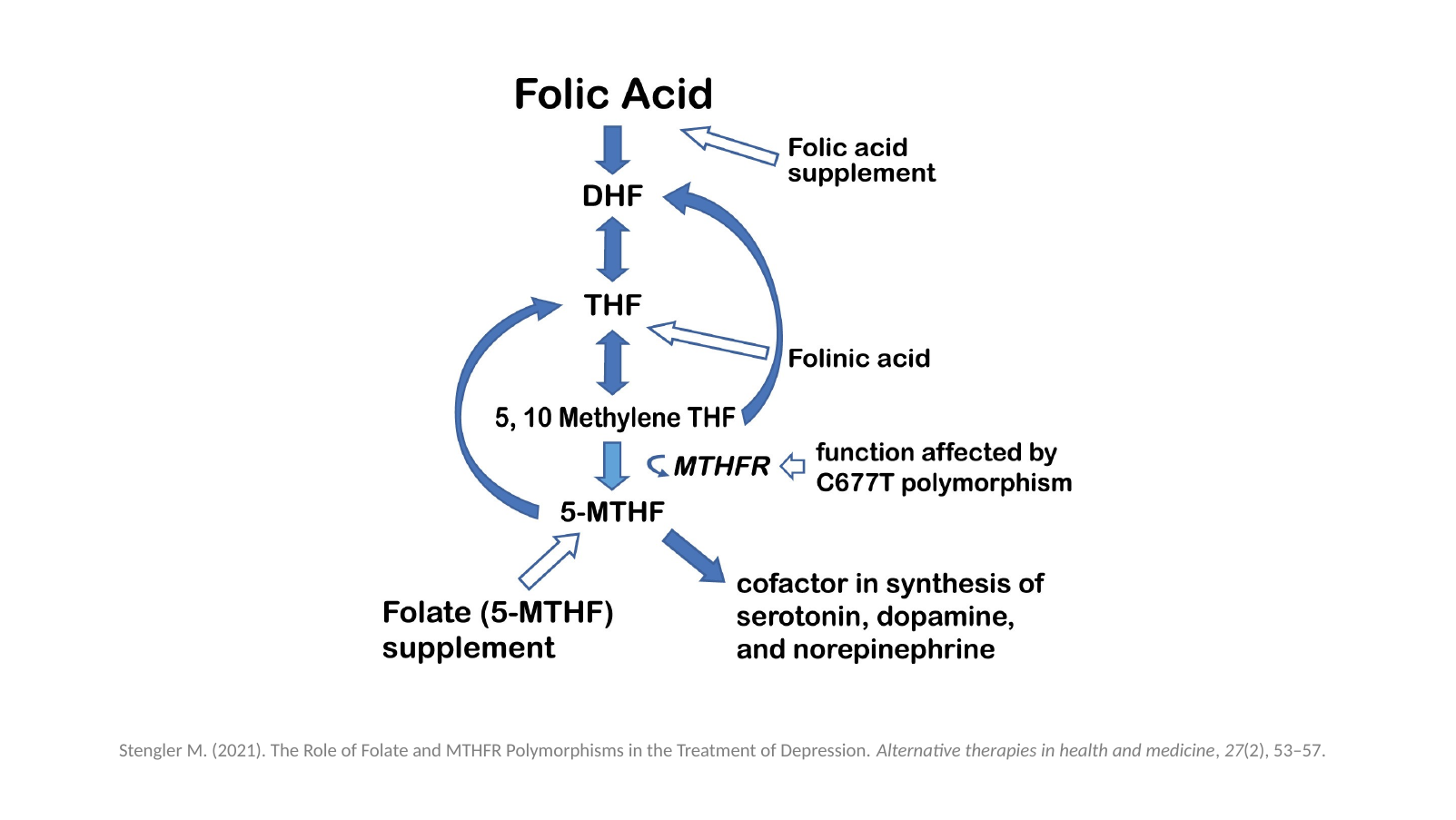
Folic acid is a synthetic, non-natural form of folate. It must undergo several metabolic steps before it becomes the active 5-MTHF. The MTHFR gene provides instructions for the methylenetetrahydrofolate reductase enzyme, which converts 5,10-methylene-THF into 5-MTHF. The two most studied common variants are C677T and A1298C. Estimates summarized in my methylfolate presentation place C677T enzyme activity at about 67% of typical activity with one copy of the variant and about 25% with two copies; A1298C generally has a milder effect, with estimates of about 83% and 61%, respectively. Having an MTHFR variant does not mean a person is unable to metabolize folic acid, but it can reduce the efficiency of this pathway. Supplemental 5-MTHF bypasses the MTHFR conversion step because it is already in the methylated form used in one-carbon metabolism. This is one reason I often favor methylfolate in my supplements.
Figure 1. Folate metabolism showing the MTHFR-dependent conversion step and how supplemental 5-MTHF enters the pathway downstream of MTHFR.
What New Research Says About Methylfolate
Randomized research has found that 5-MTHF can raise folate status effectively in people with different MTHFR C677T genotypes. A 2024 trial in pregnant women found that 5-MTHF maintained red-blood-cell and serum folate about as effectively as folic acid while producing substantially less unmetabolized folic acid in maternal plasma. A 2026 randomized trial likewise reported comparable maternal and fetal folate status with 5-MTHF and much less detectable unmetabolized folic acid. These findings support 5-MTHF as a viable supplemental form, although whether lower circulating unmetabolized folic acid produces meaningful long-term clinical benefits is still being studied. In psychiatry, randomized trials have also used L-methylfolate as an adjunct to SSRIs in some patients with treatment-resistant major depression; that is a therapeutic dose and should be clinician-directed.
Food First, Then Supplement Intelligently
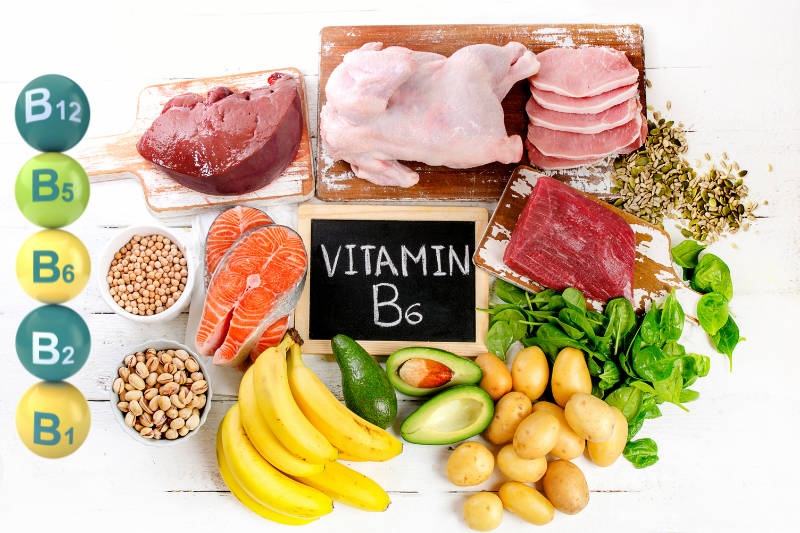
I encourage patients to get B vitamins from real foods first: organ meats, meat, poultry, fish, eggs, and dairy provide several B vitamins; leafy greens and legumes are especially important for folate; whole grains, nuts, seeds, vegetables, mushrooms, avocados, and fruit supply others. When supplementation is needed, I generally favor forms that are well absorbed and easy for the body to use, such as riboflavin-5-phosphate, pyridoxal-5-phosphate (B6), methylfolate, and methylcobalamin (B12). Methylfolate is usually the preferred form of folate. These nutrients participate in interconnected methylation and neurotransmitter pathways. Our Super B Complex Wellness combines activated forms of several key B vitamins. The goal is not simply to take massive doses; it is to provide the right forms and amounts for the individual.
Dr. Stengler's B Vitamin Guide
Dr. Stengler's B Vitamin Guide
B vitamins play essential roles in energy production, brain and nervous
system function, metabolism, blood cell formation, and many other
processes throughout the body.
Vitamin B1 (Thiamin)
Function
Energy metabolism, especially carbohydrate metabolism;
neurological activity; brain and heart function.
Food Sources
Pork, beef, liver, brewer's yeast, whole grains, brown rice,
and legumes.
Deficiency Signs
Beriberi; fatigue; loss of appetite; weight loss;
gastrointestinal problems; fluid retention; weakness; heart
abnormalities; impaired growth; neurological symptoms; and
poor memory in severe deficiency.
Vitamin B2 (Riboflavin)
Function
Energy production; fatty acid and amino acid metabolism;
redox reactions; and support of one-carbon/methylation pathways.
Food Sources
Organ meats such as liver, milk products, whole grains,
green leafy vegetables, eggs, mushrooms, broccoli, asparagus,
and fish.
Deficiency Signs
Cracking at the corners of the mouth, inflamed tongue,
eye irritation or redness, dermatitis, and, with more significant
deficiency, impaired growth and neurological effects.
Vitamin B5 (Pantothenic Acid)
Function
Coenzyme A production and the metabolism of carbohydrates,
proteins, and fats; involved in synthesis of steroid hormones
and other cellular compounds.
Food Sources
Organ meats, fish, chicken, eggs, cheese, whole grains,
avocados, cauliflower, sweet potatoes, oranges, strawberries,
yeast, and legumes.
Deficiency Signs
Deficiency is rare but can include fatigue, irritability,
gastrointestinal symptoms, numbness, and burning or shooting
sensations in the feet.
Vitamin B6 (Pyridoxine / P5P)
Function
Amino acid and protein metabolism; neurotransmitter synthesis;
red blood cell formation; immune function; glycogen metabolism;
and homocysteine metabolism.
Food Sources
Meat, poultry, fish, egg yolk, peanuts, bananas, potatoes,
whole grains, cauliflower, chickpeas, and other vegetables
and fruits.
Deficiency Signs
Mood or cognitive changes, dermatitis, cracking of the lips,
sore or swollen tongue, anemia, impaired immune function,
and neurological symptoms in significant deficiency.
Folate (Vitamin B9 / 5-MTHF)
Function
One-carbon transfer and methylation; DNA and RNA synthesis;
cell division; red blood cell production; homocysteine metabolism;
neurotransmitter-related pathways; and normal fetal neural-tube
development.
Food Sources
Dark green vegetables such as spinach, kale, broccoli,
and asparagus; organ meats; kidney beans and other legumes;
beets; citrus; yeast; and whole grains.
Deficiency Signs
Megaloblastic or macrocytic anemia, fatigue, weakness,
irritability, difficulty concentrating, shortness of breath,
palpitations, sore tongue, digestive symptoms, and increased
risk of neural-tube defects during pregnancy.
Biotin (Vitamin B7)
Function
Carbohydrate, fat, and amino acid metabolism; supports normal
skin, hair, and nail biology.
Food Sources
Organ meats, eggs, fish, meat, seeds, nuts, some vegetables,
mushrooms, whole grains, and certain legumes; intestinal bacteria
can also produce biotin.
Deficiency Signs
Deficiency is uncommon but can include dermatitis, hair thinning
or loss, brittle nails, fatigue, and neurological symptoms.
Cochrane, K. M., Elango, R., Devlin, A. M., Mayer, C., Hutcheon, J. A., & Karakochuk, C. D. (2024). Supplementation with (6S)-5-methyltetrahydrofolic acid appears as effective as folic acid in maintaining maternal folate status while reducing unmetabolised folic acid in maternal plasma: A randomised trial of pregnant women in Canada. British Journal of Nutrition, 131(1), 92-102. https://pubmed.ncbi.nlm.nih.gov/37649241/
Das, P., Babaei, P., & Nielsen, J. (2019). Metagenomic analysis of microbe-mediated vitamin metabolism in the human gut microbiome. BMC Genomics, 20, 208. https://pubmed.ncbi.nlm.nih.gov/30866812/
Draicchio, F., Hausser, J., Sharafi, M., Grier-Welch, A., Vance, A., Alamdari, N., Futterman, I. D., Chudnoff, S., Malysheva, O., Caudill, M. A., Hanson, I., & Jiang, X. (2026). Using 6S-5-methyltetrahydrofolate instead of folic acid in prenatal multivitamin reduces unmetabolized folic acid concentrations in the mother-fetus dyad: A 24-week randomized controlled trial. Frontiers in Nutrition, 13, 1679067. https://www.frontiersin.org/journals/nutrition/articles/10.3389/fnut.2026.1679067/full
National Institutes of Health, Office of Dietary Supplements. (n.d.). Riboflavin: Fact sheet for health professionals. https://ods.od.nih.gov/factsheets/Riboflavin-HealthProfessional/
National Institutes of Health, Office of Dietary Supplements. (n.d.). Thiamin: Fact sheet for health professionals. https://ods.od.nih.gov/factsheets/Thiamin-HealthProfessional/
National Institutes of Health, Office of Dietary Supplements. (n.d.). Vitamin B6: Fact sheet for health professionals. https://ods.od.nih.gov/factsheets/VitaminB6-HealthProfessional/
National Institutes of Health, Office of Dietary Supplements. (2026). Vitamin B12: Fact sheet for health professionals. https://ods.od.nih.gov/factsheets/VitaminB12-HealthProfessional/
Papakostas, G. I., Shelton, R. C., Zajecka, J. M., Etemad, B., Rickels, K., Clain, A., Baer, L., Dalton, E. D., Sacco, G. R., Schoenfeld, D., Pencina, M., Meisner, A., Bottiglieri, T., Nelson, E., Mischoulon, D., Alpert, J. E., Barbee, J. G., & Fava, M. (2012). L-methylfolate as adjunctive therapy for SSRI-resistant major depression: Results of two randomized, double-blind, parallel-sequential trials. American Journal of Psychiatry, 169(12), 1267-1274. https://pubmed.ncbi.nlm.nih.gov/23212058/
Prinz-Langenohl, R., Bramswig, S., Tobolski, O., Smulders, Y. M., Smith, D. E. C., Finglas, P. M., & Pietrzik, K. (2009). [6S]-5-methyltetrahydrofolate increases plasma folate more effectively than folic acid in women with the homozygous or wild-type 677C>T polymorphism of methylenetetrahydrofolate reductase. British Journal of Pharmacology, 158(8), 2014-2021. https://pubmed.ncbi.nlm.nih.gov/19917061/
Stengler, M. (2021). The role of folate and MTHFR polymorphisms in the treatment of depression. Alternative Therapies in Health and Medicine, 27(2), 53-57. https://pubmed.ncbi.nlm.nih.gov/32827402/
Stengler, M. (2026). Emerald methyl folate training [PowerPoint presentation].