
A major 2026 analysis published in Current Developments in Nutrition used blood samples from 7,213 people age six and older who participated in the nationally representative National Health and Nutrition Examination Survey (NHANES) from August 2021 through August 2023. Researchers measured the Omega-3 Index, which is the percentage of the long-chain omega-3 fats EPA and DHA in red blood cell membranes. They found that 54% of Americans had an undesirable Omega-3 Index below 4%, while approximately 98% were below the commonly proposed optimal level of 8%. The average Omega-3 Index was only 4.12%. This does not mean that nearly every American has the severe, classical essential-fatty-acid deficiency that can cause obvious skin disease. Rather, it shows that most Americans have a suboptimal supply of EPA and DHA compared with levels associated with better cardiovascular health. These findings fit with earlier dietary research showing that many adults do not eat the recommended amount of seafood and consume very little EPA and DHA.
Omega-3 fats are structural components of cell membranes throughout the body. EPA helps the body produce compounds involved in maintaining a balanced inflammatory response, while DHA is especially concentrated in the brain, retina, and nervous system. Higher omega-3 status has been associated with healthier triglyceride levels, normal blood-vessel function, and a lower risk of certain cardiovascular events. DHA is also important during pregnancy, infancy, and childhood because the brain and eyes are rapidly developing. Research has examined omega-3s for mood, cognition, dry eye, inflammatory conditions, and healthy aging, although the strength of evidence varies by condition. From an integrative perspective, the main concern is that chronically low intake may leave the heart, brain, eyes, and cell membranes without an optimal supply of these foundational fats.
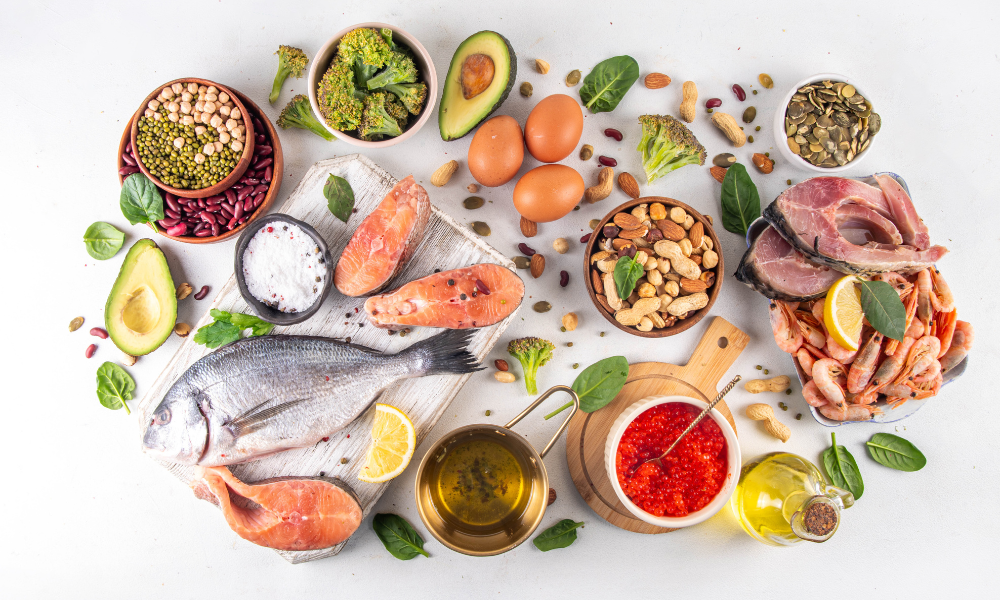
The richest natural sources of EPA and DHA are cold-water fatty fish. Excellent choices include salmon, sardines, anchovies, herring, cod, and rainbow trout. For people concerned about purity, I generally favor smaller, shorter-lived fish such as sardines, anchovies, and herring because they tend to accumulate less mercury than large predatory fish. Salmon and freshwater trout are also listed by the U.S. Food and Drug Administration as lower-mercury “Best Choices.” Of course wild salmon is best. Avoid or sharply limit high-mercury species such as king mackerel, shark, swordfish, orange roughy, marlin, Gulf of Mexico tilefish, and bigeye tuna. Plant foods—including ground flaxseed, chia seeds, hemp seeds, walnuts, and soy foods—provide alpha-linolenic acid (ALA). These foods are healthy, but the body converts only a limited amount of ALA into EPA and DHA, so they may not raise the Omega-3 Index as effectively as fish or algae-derived omega-3s.
The Omega-3 Index is a useful blood test because red blood cells reflect longer-term intake over roughly the previous several months, rather than only what a person ate recently. When a patient’s level is low, I look at fish intake, food quality, digestion, age, medications, and whether a purified supplement is appropriate. A practical food goal for many adults is two servings of lower-mercury fatty fish per week, while children should receive age-appropriate portions. For those who do not eat fish, an algae-derived EPA and DHA product is a direct vegetarian option. When choosing fish oil, look for a product that clearly lists the amounts of EPA and DHA—not just “total fish oil”—and has independent testing for oxidation, heavy metals, PCBs, and other contaminants.
National Institutes of Health, Office of Dietary Supplements. (2025). Omega-3 fatty acids: Fact sheet for health professionals. https://ods.od.nih.gov/factsheets/Omega3FattyAcids-HealthProfessional/
Papanikolaou, Y., Brooks, J., Reider, C., & Fulgoni, V. L., III. (2014). U.S. adults are not meeting recommended levels for fish and omega-3 fatty acid intake: Results of an analysis using observational data from NHANES 2003–2008. Nutrition Journal, 13, Article 31. https://doi.org/10.1186/1475-2891-13-31
Powers, C. D., Sternberg, M. R., Mineva, E. M., Clifton, C. C., Leachman, J. R., Wambogo, E., & Pfeiffer, C. M. (2026). Over half of the United States population had an undesirably low Omega-3 Index based on erythrocyte membrane measurements: Results from the cross-sectional NHANES from August 2021 to August 2023. Current Developments in Nutrition, 10(6), 107715. https://doi.org/10.1016/j.cdnut.2026.107715
U.S. Food and Drug Administration. (n.d.). Advice about eating fish. https://www.fda.gov/food/consumers/advice-about-eating-fish


