
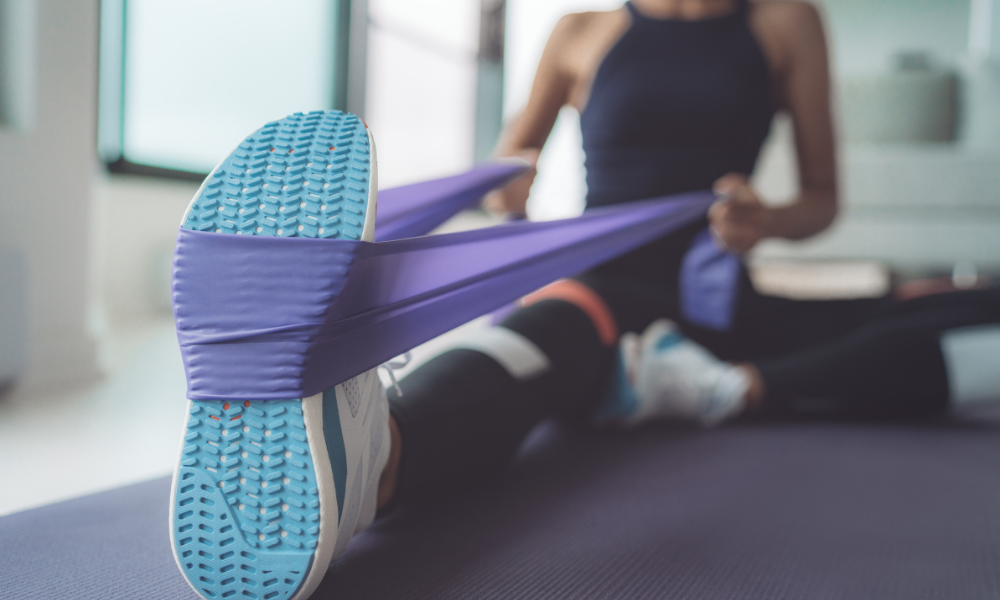
Bones may look solid and unchanging, but they are living tissue that continually responds to the demands placed upon them. Each time a muscle contracts forcefully against a bone, or the skeleton absorbs a safe impact, the body receives a signal to maintain or build stronger bone. This matters because bone loss commonly accelerates with aging, especially after menopause, but it also affects older men. Walking is excellent for the heart, circulation, mood, and mobility, yet ordinary walking usually does not challenge the hip and spine enough to substantially increase bone density. Research in adults and seniors shows that targeted resistance training can preserve bone and, in some people, produce measurable gains in bone mineral density while also improving muscle strength, posture, balance, and the ability to prevent a fall.
The most effective approach is progressive resistance training: gradually increasing the load as the body becomes stronger. Bone-targeting exercises include squats or sit-to-stands, deadlift or hip-hinge movements, lunges, step-ups, leg presses, calf raises, rows, chest presses, and overhead presses. Free weights and well-designed weight machines generally make progression easier to measure, although resistance bands and body-weight exercises are useful starting points. A 2025 meta-analysis of 17 randomized trials in postmenopausal women found improvements at the lumbar spine, femoral neck, and total hip, with the strongest results generally associated with higher-intensity training, sessions performed about three times weekly, and programs lasting close to a year. Supervised high-intensity resistance and impact programs have also improved spine and hip-related measurements in postmenopausal women and in middle-aged and older men with low bone mass. Power training—lifting the weight more rapidly during the upward phase while lowering it under control—may add value because it develops the quick muscle force needed to catch oneself during a trip or loss of balance.
Bone also responds to brief, varied impact. For healthy adults without advanced osteoporosis, joint instability, or significant pain, this may include heel drops, hopping, small jumps, stair climbing, or weighted step-ups. Impact should be introduced gradually and is not appropriate for everyone. Whole-body vibration platforms, often called Power Plates, create rapid mechanical vibrations while a person stands or performs exercises on the platform. Two recent 2025 systematic reviews found that vibration training may modestly improve bone density at selected sites in some older adults, but the results varied according to vibration settings, exercise position, treatment length, and the population studied. For this reason, a Power Plate is best considered an optional supplement for people who tolerate it—not a replacement for progressive resistance training, balance work, and regular weight-bearing movement.
A practical goal for many adults is resistance training two or three nonconsecutive days per week, working the major muscle groups and emphasizing the hips, legs, back, and upper body. Beginners can start with one or two sets of 8 to 12 controlled repetitions and gradually increase resistance; more experienced adults may benefit from heavier loads and fewer repetitions under qualified supervision. Because the best studies using heavy lifting and impact carefully screened and supervised participants, adults with osteoporosis, prior fragility fractures, severe spinal curvature, significant arthritis, dizziness, or balance problems should obtain individualized guidance from a physician and a physical therapist or exercise professional familiar with osteoporosis. Avoid repeated loaded spinal flexion, forceful twisting, and poorly controlled high-impact exercise when fracture risk is elevated. Combined with adequate protein, calcium, vitamin D, magnesium, vitamin K, and sufficient calories, consistent resistance training gives both men and women one of the most powerful non-drug tools available for protecting bone, reducing falls, and remaining strong and independent with age.
Beck, B. R., Daly, R. M., Singh, M. A. F., & Taaffe, D. R. (2017). Exercise and Sports Science Australia (ESSA) position statement on exercise prescription for the prevention and management of osteoporosis. Journal of Science and Medicine in Sport, 20(5), 438–445. https://doi.org/10.1016/j.jsams.2016.10.001
Daly, R. M., Dalla Via, J., Duckham, R. L., Fraser, S. F., & Helge, E. W. (2019). Exercise for the prevention of osteoporosis in postmenopausal women: An evidence-based guide to the optimal prescription. Brazilian Journal of Physical Therapy, 23(2), 170–180. https://doi.org/10.1016/j.bjpt.2018.11.011
Harding, A. T., Weeks, B. K., Lambert, C., Watson, S. L., Weis, L. J., & Beck, B. R. (2020). A comparison of bone-targeted exercise strategies to reduce fracture risk in middle-aged and older men with osteopenia and osteoporosis: LIFTMOR-M semi-randomized controlled trial. Journal of Bone and Mineral Research, 35(8), 1404–1414. https://doi.org/10.1002/jbmr.4008
Massini, D. A., Almeida, T. A. F., Macedo, A. G., Peres, A. B., Hernández-Beltrán, V., Gamonales, J. M., Espada, M. C., Neiva, C. M., & Pessôa Filho, D. M. (2025). Effect of whole-body vibration training on bone mineral density in older adults: A systematic review and meta-analysis. PeerJ, 13, e19230. https://doi.org/10.7717/peerj.19230
Massini, D. A., Nedog, F. H., de Oliveira, T. P., Almeida, T. A. F., Santana, C. A. A., Neiva, C. M., Macedo, A. G., Castro, E. A., Espada, M. C., Santos, F. J., & Pessôa Filho, D. M. (2022). The effect of resistance training on bone mineral density in older adults: A systematic review and meta-analysis. Healthcare, 10(6), 1129. https://doi.org/10.3390/healthcare10061129
Watson, S. L., Weeks, B. K., Weis, L. J., Harding, A. T., Horan, S. A., & Beck, B. R. (2018). High-intensity resistance and impact training improves bone mineral density and physical function in postmenopausal women with osteopenia and osteoporosis: The LIFTMOR randomized controlled trial. Journal of Bone and Mineral Research, 33(2), 211–220. https://doi.org/10.1002/jbmr.3284
Zhao, F., Su, W., Sun, Y., Wang, J., Lu, B., & Yun, H. (2025). Optimal resistance training parameters for improving bone mineral density in postmenopausal women: A systematic review and meta-analysis. Journal of Orthopaedic Surgery and Research, 20, 523. https://doi.org/10.1186/s13018-025-05890-1
Zhao, R., Zhang, M., & Zhang, Q. (2015). The effectiveness of combined exercise interventions for preventing postmenopausal bone loss: A systematic review and meta-analysis. Journal of Orthopaedic & Sports Physical Therapy, 45(4), 241–251. https://doi.org/10.2519/jospt.2015.5716


