
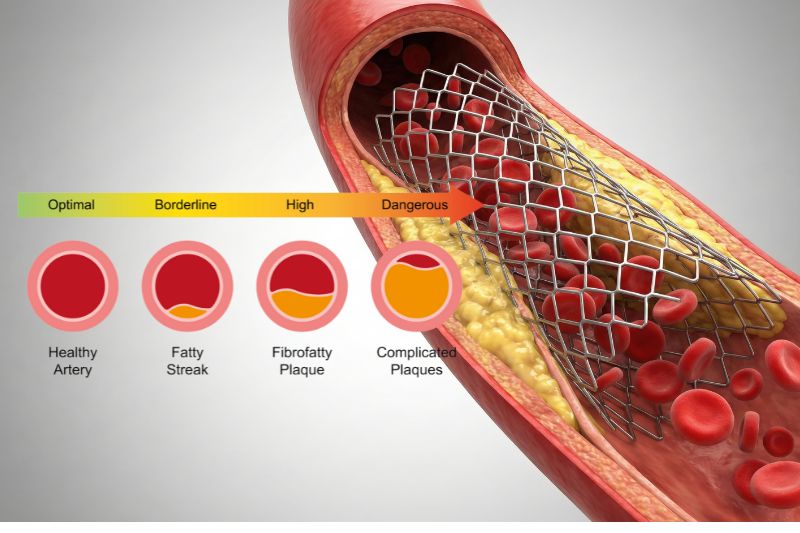
Heart disease is the leading cause of death for both men and women in the United States. About one person dies every 34 seconds from cardiovascular disease, which means it accounts for roughly one out of every three deaths. The most common type of heart disease is coronary artery disease (CAD). CAD occurs when the arteries that supply blood to the heart become narrowed by fatty buildup called plaque. When these arteries become blocked or suddenly close off, a heart attack can occur. Each year, hundreds of thousands of Americans die from CAD, and more than 800,000 people experience a heart attack.
For most people, heart artery health is closely tied to overall health. When diet and lifestyle support the body’s natural design, plaque buildup in the heart arteries is much less likely. However, CAD develops from a combination of factors, including genetics and damage to the artery lining.
The inner lining of blood vessels, called the endothelium, plays a key protective role. When it is damaged, plaque can begin to form. Common causes of endothelial damage include:
Other factors that raise the risk of CAD include aging, obesity, exposure to environmental toxins (such as air pollution or lead), excessive alcohol intake, poor sleep, and mental health conditions like chronic stress, anxiety, depression, or post-traumatic stress disorder. Certain medical conditions also increase risk, including metabolic syndrome, chronic kidney disease, autoimmune diseases, and even prior COVID-19 infection. Addressing these underlying factors is essential for preventing and managing CAD.
The body is not passive when it comes to artery health. It has built-in systems that help prevent plaque buildup and improve plaque stability.
A healthy endothelium produces substances such as nitric oxide, which help blood vessels stay relaxed, flexible, and resistant to inflammation and oxidation. This makes it harder for plaque to form and grow.
The body also produces specialized repair cells called mesenchymal stromal cells (MSCs). These cells are released into areas of plaque in response to inflammatory signals in the bloodstream. MSCs help restore the health of the artery lining and slow or stop plaque buildup. They work by improving local cell signaling, reducing inflammation, improving cholesterol balance, and strengthening plaque so it is less likely to rupture. In some cases, these effects can also reduce plaque size.
High-density lipoprotein (HDL), often called “good cholesterol,” plays a protective role in artery health. HDL helps remove harmful cholesterol from plaque, prevents cholesterol from becoming damaged by oxidation, and reduces inflammatory signals that allow plaque to stick to artery walls. Exercise is effective for increasing HDL. Also, supplements such as Bergamot extract can improve levels.
A heart-healthy diet and lifestyle are central to preventing and treating CAD.
Research has consistently shown that a Mediterranean diet rich in fruits, vegetables, whole grains, olive oil, and healthy fats are associated with lower risk of heart disease. Long-term dietary patterns that emphasize olive oil have been linked to slower progression of artery plaque compared with low-fat diets.
One well-known clinical study (Lifestyle Heart Trial) examined people with moderate to severe coronary artery disease who followed an intensive lifestyle program. This program included regular aerobic exercise, stress management, quitting smoking, group support, and a whole-foods vegetarian diet very low in fat. Over several years, people who followed this program showed reduced narrowing of their heart arteries and less plaque buildup, while those who did not make these changes showed worsening disease. Importantly, people in the lifestyle group also experienced fewer heart-related events.
Because many people with CAD take cholesterol-lowering and other heart medications, researchers have also studied whether diet and lifestyle changes add benefits beyond standard medical care. In these studies, people who combined intensive lifestyle changes with a heart-healthy diet rich in fruits, vegetables, whole grains, and low-fat dairy showed greater reductions in dangerous, soft (non-calcified) plaque than those who received medical treatment alone.
Diabetes is one of the strongest risk factors for CAD. People with diabetes have up to a four-fold higher risk of dying from heart disease compared with those without diabetes. CAD is the leading cause of death in both type 1 and type 2 diabetes. Good blood sugar control, along with attention to diet, lifestyle, and other risk factors, is therefore critical for protecting heart health in people with diabetes. Therefore, a proactive program that prevents and treats diabetes is essential for preventing and treating coronary artery disease.
Coronary artery disease develops over time from damage to the artery lining and buildup of plaque, but the body has natural systems designed to protect and repair blood vessels. Healthy lifestyle choices — especially diet, physical activity, stress management, avoidance of smoking, and specific nutritional supplements — work together with the body’s own defenses to slow, stabilize, and in some cases partially reverse plaque buildup, reducing the risk of heart attack and other serious outcomes.
References
Aronson, Doron, and Elazer R. Edelman. 2014. “Coronary Artery Disease and Diabetes Mellitus.” Cardiology Clinics 32 (3): 439–55. https://doi.org/10.1016/j.ccl.2014.04.001.
Egea, Virginia. 2024. “Caught in Action: How MSCs Modulate Atherosclerotic Plaque.” Frontiers in Cell and Developmental Biology 12 (March): 1379091. https://doi.org/10.3389/fcell.2024.1379091.
Heart Disease Facts.” 2024. Heart Disease. October 24, 2024. https://www.cdc.gov/heart-disease/data-research/facts-stats/index.html.
Henzel, Jan, Cezary Kępka, Mariusz Kruk, Magdalena Makarewicz-Wujec, Łukasz Wardziak, Piotr Trochimiuk, Zofia Dzielińska, and Marcin Demkow. 2020. “High-Risk Coronary Plaque Regression After Intensive Lifestyle Intervention in Nonobstructive Coronary Disease.” JACC. Cardiovascular Imaging 14 (6): 1192–1202. https://doi.org/10.1016/j.jcmg.2020.10.019.
Jimenez-Torres, Jose, Juan F. Alcalá-Diaz, Jose D. Torres-Peña, Francisco M. Gutierrez-Mariscal, Ana Leon-Acuña, Purificación Gómez-Luna, Carolina Fernández-Gandara, et al. 2021. “Mediterranean Diet Reduces Atherosclerosis Progression in Coronary Heart Disease: An Analysis of the CORDIOPREV Randomized Controlled Trial.” Stroke 52 (11): 3440–49. https://doi.org/10.1161/strokeaha.120.033214.
Ornish, Dean. 1998. “Intensive Lifestyle Changes for Reversal of Coronary Heart Disease.” JAMA 280 (23): 2001. https://doi.org/10.1001/jama.280.23.2001.


