
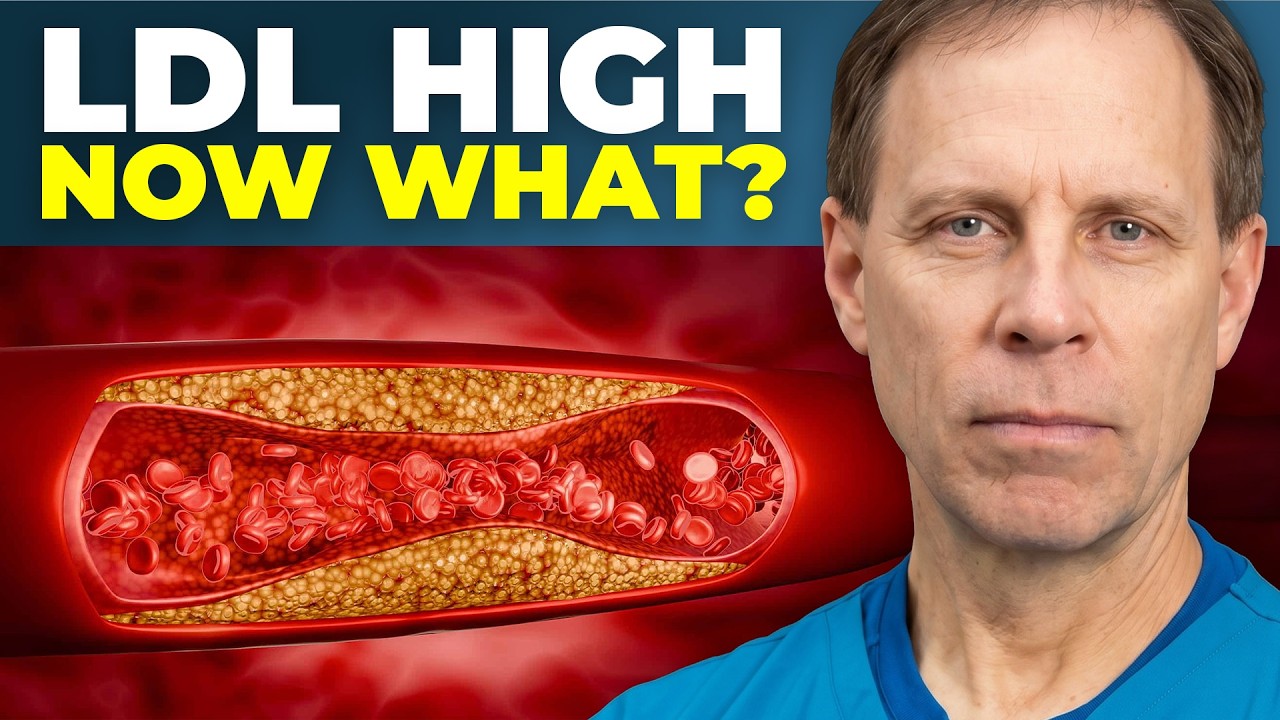

Your blood work comes back and your LDL is flag high. The next thing you hear from your doctor is you need a prescription drug for lowering cholesterol, but that one number can't answer the question you actually care about. Are my arteries in danger? In the next few minutes, you'll learn what that number leaves out, and you'll leave with specific questions to ask. So, the decision is about your real risk. I'm Dr. Dr. Mark Stangler and after more than 30 years in clinical practice, I believe that cardiovascular prevention deserves a more complete well-rounded conversation than simply identifying one elevated lipid marker. One of the most important parts of that conversation is cardio metabolic syndrome. This pattern commonly includes insulin resistance, excess abdominal fat, elevated triglycerides, low HDL, high blood pressure, and rising blood sugar. These problems are interconnected. They can create conditions that promote arterial inflammation and unfavorable lipoprotein pattern and plaque formation. If we focus only on LDL cholesterol, we can miss and often do miss the major drivers of cardiovascular disease. Today, we'll discuss what cholesterol does for you, how insulin resistance changes your cardiovascular risk, and why a standard cholesterol result may miss important information. Then, we'll cover testing, nutrition, exercise, and the supplements I consider as part of an individualized plan. Now, let's begin with cholesterol itself. Cholesterol is necessary for life. Your body uses it to build cell membranes amongst many other things. For example, it's also a starting material for steroid hormones like cortisol, estrogen, and testosterone. It's also involved in vitamin D synthesis and the production of bile acids that help digest fats. Your body manufactures cholesterol because it needs it. LDL stands for low density lipoprotein. LDL particles transport cholesterol through your bloodstream. The LDL cholesterol number on your laboratory report measures the amount of cholesterol carried inside those particles. It does not directly measure how many particles are circulating, how much plaque is in your arteries, or how metabolically healthy you are. This is why quote bad cholesterol unquote is an incomplete description. However, cholesterol's necessary functions do not mean that every circulating level is safe. Excess cholesterol carrying particles can contribute to atherosclerosis. The point is to understand how they fit into the larger process. And for many people, insulin resistance is a major part of that process. Insulin is a hormone that regulates blood glucose and the handling of nutrients. When your muscles, liver, and fat tissue become less responsive to insulin, your pancreas may compensate and often does by producing more insulin. For a period of time, that extra insulin can help keep blood glucose within normal ranges. This means insulin resistance can be developing before a person is diagnosed with diabetes. Now, someone may be told their blood sugar is fine while their waistline is increasing, triglycerides are climbing, and blood pressure is moving upward. These changes deserve attention. Metabolic syndrome is usually identified by a combination of at least three features. Increased waist circumference, elevated triglycerides, low HDL cholesterol, elevated blood pressure, and elevated fasting glucose. You do not need to wait until every feature is present before taking action. Now, let's connect insulin resistance to the lipid pattern that's problematic. Now normally insulin helps regulate the release of fatty acids from fat tissue. When that regulation becomes impaired more fatty acids can reach the liver along with changes in liver metabolism this can promote increased production and release of triglyceride rich particles called bl stands for very low density lipoprotein. As these particles are processed in circulation, they contribute to a pattern that often includes higher triglycerides, lower HDL cholesterol, and more small dense LDL particles. This is sometimes called aogenic vis lipidmia. A lipid pattern associated with plaque forming risk. And here's why this matters. Your LDL cholesterol number may not look dramatically elevated, yet you may have a high number of aogenic particles. Smaller LDL particles carry less cholesterol per particle. That means a relatively ordinarylook LDL cholesterol result. But it can coexist with a larger particle burden. If we look only at the amount of cholesterol being carried, we may miss and often do miss how many particles are being carried with it. Apol lipoprotein B or apo B in short can help clarify this. Ap is a protein found on aogenic particles. Measuring helps to estimate their number including LDL and triglyceride rich remnant particles. Think of LDL cholesterol as the amount of cargo and APOB as information about the number of vehicles. Both matter but they are not the same measurement. Small dense LDL is an important clue to metabolic dysfunction. However, larger LDL particles are not automatically harmless. We need to consider the total aogenic burden with the different particles. Hey, one second. If you're looking for help with any type of health issue, I put together a line of doctor grade supplements that I formulated myself. They're the same formulas I use with my patients. Click the link below to check them out. Okay, back to the video. L add inflammation. Excess visceral fat, the fat surrounding organs in the abdomen, is metabolically active and it interacts with immune cells and can contribute to release of inflammatory signals. Inflammation and insulin resistance can reinforce one another. Insulin resistance can also interfere with normal blood vessel signaling and contribute to endothelial function. The endothelium is the living layer cells lining your blood vessels. It helps regulate vessel relaxation, blood flow, clotting and immune activity. When this environment becomes dysfunctional, the conditions favoring atherosclerosis or hardening of the arteries becomes more concerning. At the same time, LDL and other ableb containing particles in can enter the artery wall and become retained air especially again those small dense LDL particles that retention can trigger inflammatory responses. immune cells take up lipids and over time these processes contribute to plaque development. So we have several connected problems. Insulin resistance, altered lipid handling or triglyceride rich particles, an increase in small dense LDL and more inflammatory artery wall environments. Elevated blood pressure adds further stress. If glucose becomes chronically elevated, that contributes additional vascular injury. This is why cardiomatabolic syndrome deserves such a central place in prevention. Lowering LDL may be useful but it does not automatically correct insulin resistance, excess visceral fat, high blood pressure or poor glucose regulation. Those problems need their own attention and I have videos addressing many of those. And improving insulin resistance does not give us permission to ignore a persistently high levels of small dense LDL particles or APOB as well. The goal is to improve the whole risk pattern. Consider two people with the same LDL cholesterol. One has high triglycerides, low HDL, and expanding waistline, elevated blood pressure, and rise in glucose. The other person has healthy triglycerides, healthy blood pressure, normal glucose levels, and exercises regularly. Their LDL numbers are the same, but their metabolic environments are different. That is their problem with making a treatment decision from one number alone, such as LDL cholesterol, as most doctors do. A study done by Kevin Kip and colleagues published in British medical journal Open in 2024, illustrates why interpretation requires care. It followed over 170,000 adults ages 50 to 89 without diabetes or established cardiovascular disease at baseline. They were not taking statins at baseline or during the first year. Over approximately six years, those with LDL levels between 100 and 189, get this, had lower adjusted all cause mortality than those with LDL between 80 and 99. Risk was higher in the lowest category and LDL of 190 or above. That challenges the assumption that a lower untreated LDL always identifies a healthier person. Now this was an observational research study not a trial of cholesterol-lowering treatment. Its main outcome was death from any cause. So we cannot establish a direct uh ideal target or prove that lowering LDL fails to prevent heart attacks. The lesson is to interpret the results in context. In practice I want information from three areas. First the lipid pattern and secondly the metabolic picture. weight circumference, blood pressure, fasting glucose, and A1C. Now, depending on the situation, fasting insulin may provide additional context, although it's not a standalone diagnostic test. And inflammatory markers such as high sensitivity Crain can also be useful. Third, I consider evidence of arterial disease. You can use a coronary calcium score to measure calcified plaque. That helps to make decisions. However, a zero score does not exclude non-calcified plaque or the soft plaque which actually is a more dangerous type of plaque that can rupture more easily and cause heart attacks and other cardiovascular problems. Also, when clinically appropriate, coronary CT angography can assess both calcified and non-calcified plaque as well. These tests answer different questions. We use it when the results are likely to change care and I like to see is the patient forming plaque arteries and if so we need to be more aggressive. If not let's take a more conservative approach and nutrition is foundational for someone with insulin resistance and elevated triglycerides. I pay particularly strong attention to sugary drinks, sweets, refined starches, excess calories and alcohol. These substances along with most grains can contribute to an unfavorable metabolic pattern. One approach I recommend is a Mediterranean style diet emphasizing vegetables, extra virgin olive oil, nuts, legumes, fish, and other minimally processed foods. I adjust carbohydrate intake to the person's glucose regulation, triglycerides, activity level, and response. Reducing refined carbohydrates does not mean treating every carbohydrate containing food as equivalent. Lentils and vegetables are very different from sod and pastries. Obviously, the cardiorb analysis published in stroke journal in 2021 found more favorable changes in corroed artery wall thickness with an olive oilrich Mediterranean diet than with a low-fat diet in people with coronary heart disease. The lifestyle heart trial reported in JAM in 1998 also demonstrated the value of a comprehensive lifestyle change. Its program combined a very low-fat vegetarian diet with exercise, stress management, stopping smoking, and group support. The intervention group showed improvement in coronary artery narrowing compared with usual care. Now another study found greater improvement in non-calcified the soft coronary plaque when a DASHbased dietary intervention was added to optimal medical therapy. That stands for the dietary approach to systolic hypertension which emphasizes a lot of fruits and vegetables. However, I also consider a plant-based or paleo style eating pattern when appropriate when it matches the person's lifestyle when it matches their genetics appropriately. The important question is how's the person responding to the treatment? Are the triglycerides improvement? Is the glucose and insulin levels improving? Is the blood pressure coming down? Is excess abdominal fat decreasing? What's happening with those LDL particles, especially the small dense LB L particles and the apo lipoprotein B? So, a diet should be evaluated by the overall response with the labs that we're running. Sometimes I'll incorporate a small amount of unsweetened palm branch juice about 2 ounces diluted water into a cardiovascular nutritional plant. That's been shown to have benefits for the artery walls. In addition, of course, exercise is equally important, especially when insulin resistance is important. Your muscles are a major site of glucose use. Regular activity helps improve glucose handling, while resistance training helps preserve and build muscle. I recommend combining aerobic activity with resistance training on different days and adapting to the person's health and fitness. Now, sleep and stress management also matters because they affect appetite, glucose regulation, blood pressure, and daily behavior. Now, let's discuss supplements. I choose the supplements for patients according to their laboratory findings, medical history, medications they may be on, and the treatment goals. They of course do not replace the work of improving a patient's metabolic health. Now, bergamont extract is one option for lipid support. A six-month perspective study published in Frontiers in Pharmacology reported improvements in lipids, the small dense LDL particles, which is very important, and even corroded artery wall thickness. Typically, I recommend a dose of around 375 milligrams a day of a standardized extract of bergamont. Bourberine is another good option I consider when lipid imbalance also occurs along with metabolic concerns. Research has shown that bourberine extracts improve LDL cholesterol levels, triglyceride levels as well as the small dense LDL particles as well. For lipid support, I usually recommend 500 to,000 milligrams a day but individualized to the portion and using high absorbable bourberine. Reduce rice extract preparations lower cholesterol levels including LDL total and triglycerides. A 2024 meta analysis in the journal nutrients reported an average LDL reduction of approximately 36 mg per deciliter. Now I'm more focused on the LDL particles but you could also of course measure the LDL as well. And the dose I recommend of red yeast rice extract is 2400 to 3600 mg daily. Now preparation is very import. So you got to make sure you're getting quality products and make sure you get a product that is citroin free. That's what the high quality red yeast rice extracts have. Age garlic extracts another option for cardiovascular support. It's been studied for blood pressure and measures of vascular health including calcification of the coronary arteries and their progression. I typically recommend what the studies use and that's 1,200 milligrams twice daily. Now, vitamin K2 has become a very important nutrient in the treatment and prevention of calcification of the arteries. The Roderdam study found an association between higher dietary vitamin K2 intake and lower coronary heart disease risk. Also, a 2-year randomized trial published in JAMA cardiology in 2026 studied 180 patients with coronary artery disease using 360 micrograms of vitamin K2. Now the vitamin K2 group had slower progression of coronary calcification compared to those on placebo. So this is a very encouraging result. For high triglycerides, you certainly can use the age garlic extract. You can use the red yeast rice extract. You can use a bergamont extract and also omega-3 fatty acid supplements, fish oil supplements. A high dose 2 to four grams of EPA daily. But when it comes to high triglycerides, remember the metabolic connection. If you have high insulin levels and glucose levels, the key to getting your triglycerides down is to getting your glucose and insulin levels down. And for those of you who are watching, you're taking statin for whatever reason, make sure you're supplementing co-enzyme Q10. CoQ10 [snorts] is depleted with Stan use. This actually has been very well studied. And so, make sure you're supplementing 100 to 200 milligrams with a meal daily. So, you can see there's a lot of things to consider, a lot of questions to ask when it comes to your cardiovascular risk. So before your next appointment, ask do I have evidence of insulin resistance or cardiomatabolic syndrome? Are my triglycerides, my HDL levels out of balance? How's my waistline? How's my blood pressure? How's my glucose and insulin levels? How's my hemoglobin A1C? Would measuring apoloprotein B help clarify my particle burden? What are my small LVL dense particle numbers? Would imaging help me decide how aggressive of a treatment I need in the prevention and treatment of coronary artery disease? These questions move the conversation toward meaningful prevention. Cardiometabolic syndrome is a major driver of cardiovascular risk. Insulin resistance can contribute to arterial dysfunction and inflammation while promoting high triglycerides, low HDL, and increased small dead LDL particles. These changes can work together to promote plaque formation. That's why focusing on just your LGL cholesterol is incomplete and even dangerous. We need to address the aogenic particles and the metabolic environment in which they circulate. Now, if you want to go deeper into how I think about your health, how your cardiovascular system is engineered, how the best work at the root causes of cardiovascular disease, I recommend my new book, Ultimate Healing. and you can pre-order it on Amazon right now. Whatever you do next, base it on your real risk, not on one number. Well, I look forward to meeting you in other videos on many different subjects, including cardiovascular health. And I look forward to meeting you again in the near future.
A high LDL cholesterol number is not the full picture of your heart disease risk. In this video, I explain why cardiometabolic syndrome, insulin resistance, and small dense LDL particles matter more than one lab value, which tests actually clarify your real risk, and the diet, lifestyle, and evidence-based supplements I use with patients to support cardiovascular health.


