
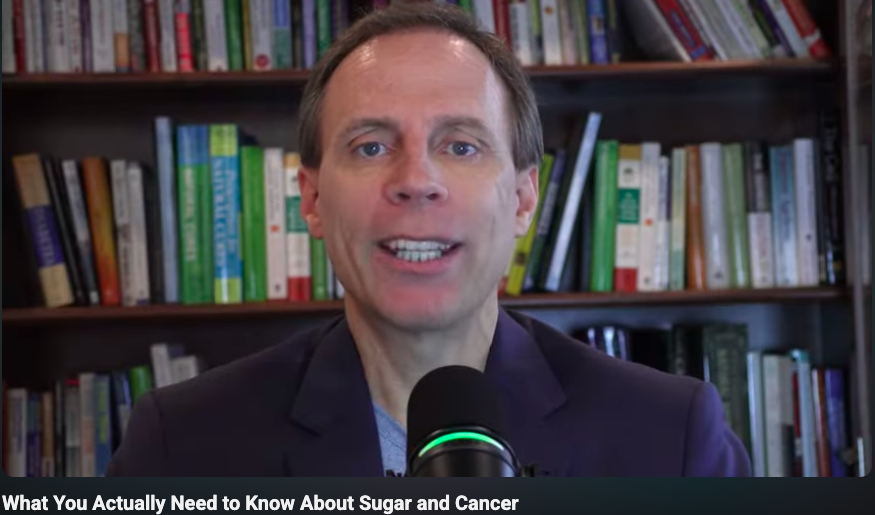

Dr. Stengler: Does sugar cause cancer? I've had so many patients throughout the years who have cancer, seeing their oncologist, and when they ask their oncologist about diet, the oncologist tells them it really has no effect on the outcome of their cancer. I know that sounds very strange, but after you've heard it a hundred times from patients, you know that the oncologists are telling patients this type of myth. Now, what about sugar? Patients ask oncologists, does sugar cause cancer? Most patients report to me that their oncologists tell them no, sugar has no effect on their cancer, and not to worry about it — eat as much sugar as you want.
Just the other day I had a patient, a lady with metastatic breast cancer, just starting her cancer therapies with her oncologist, and she asked her oncologist about sugar, and he told her sugar has no effect on cancer, eat as much as you want, and just maintain your weight with whatever foods you want, even sugary foods, because weight maintenance is very important when you have cancer. Well, then she came in to see me, and we discussed this in more detail, and I told her of course diet affects your cancer. We have many studies demonstrating that people's susceptibility to cancer is related to their diet.
Now, think of cancer as a fire, and think of sugar as a type of fuel or gasoline added to the fire. If you have an existing fire — caused by whatever the cause is in the body, which could be many different things like toxins, high stress, or medications — and the cancer is going on, sugar really is analogous to fuel added to the fire. It doesn't make sense that if you have a fire going on, you add fuel to it; you want to take away the building blocks of fire. The way this works metabolically in the body is insulin resistance. We know about 50% or more of the adult population in America has pre-diabetes or diabetes — they have cardiometabolic syndrome, and basically have insulin resistance. This occurs when the cells become resistant to the hormone insulin. Insulin has the function of transporting glucose into your cells, so when you eat a lot of simple carbs or sugar, your insulin goes up and your body transports it into the cells so it doesn't stay in the bloodstream, where it's toxic to things like your brain, kidneys, and liver. So insulin is a good thing, a good hormone, but when insulin levels are too high for too long, that actually acts as a fuel source for cancer.
If you pick up any textbook on cancer — and when I've taken courses on cancer, we have these big, thick textbooks — you'll see the hallmarks of cancer, and in there you will see that insulin is a tumor promoter. It is carcinogenic, and this is the reason why people who have diabetes have higher cancer rates. When people with type 2 diabetes who have major insulin resistance have their insulin levels spiking, we know that promotes inflammation and is tumor-promoting. So yes, while it's true that sugar doesn't directly cause cancer, we know that it indirectly causes cancer because high insulin levels over long periods of time fuel cancer growth — they're tumor promoters. So that's where these oncologists are wrong, and they should know this because they do understand that people with diabetes are at higher risk for cancer.
This is why it's so important to avoid simple sugars just for general health, but especially if you have cancer or a history of cancer — you don't want to be eating high-glycemic foods, foods in the refined state. So a lot of the breads, pastas, crackers, cookies, and fruit juices are very problematic for your insulin levels. This is why I recommend a lot of patients eat a modified Mediterranean diet — a diet high in fruits and vegetables, high in nuts and seeds, legumes, with cold-water fish like wild salmon, lower amounts of poultry, and small amounts of red meat. This is an insulin-balancing protocol that fights insulin resistance and is good for the immune system; the Mediterranean diet has been shown to have cancer-protective properties. Other people like other diets — if you have some excess weight, a ketogenic diet is going to be very good in terms of combating insulin resistance, and there are various low-carb diets. It depends on your state of health, your genetics, and how you do these diets, but we've got to get those simple sugars out of the diet.
The other thing to remember when it comes to cancer is that simple sugars reduce the activity of your immune system, your white blood cells. Studies have been done where, when you get sugar loads through soda pops and a lot of simple carbs, that reduces the activity of the immune system, which is obviously a problem for cancer as well. So there you have it: we know that sugar and simple carbohydrates fuel cancer because of the effects on the tumor-promoting hormone insulin. This is what you can discuss with your oncologist, and the reason we don't want people eating a lot of simple carbs and sugars when they're trying to prevent and treat cancer. For more videos on cancer and diet and other subjects related to cancer, you can see more of my videos on this channel.
Does Sugar Really Feed Cancer? The Truth Your Doctor Might Not Tell You
While many conventional oncologists dismiss the sugar-cancer connection, modern research tells a different story. In this powerful video, Dr. Mark Stengler explains how chronically high insulin levels and refined carbs act as fertilizer for tumor growth—and what you can do to fight back naturally.
🧬 Inside this must-watch video:
✅ How insulin resistance promotes cancer cell growth
✅ Why simple sugars and high-glycemic foods can weaken your immune defenses
✅ The science behind low-glycemic, anti-inflammatory diets like Mediterranean & keto
✅ Nutrition strategies to support recovery and prevention
✅ Functional medicine insights you won’t hear in most oncology offices
🎯 Whether you're proactively protecting your health or navigating recovery, this video offers real answers backed by science—not outdated myths.
👉 Watch now to learn how what you eat could be one of your strongest tools in the fight against cancer.
🔔𝐃𝐨𝐧'𝐭 𝐟𝐨𝐫𝐠𝐞𝐭 𝐭𝐨 𝐬𝐮𝐛𝐬𝐜𝐫𝐢𝐛𝐞 𝐭𝐨 𝐦𝐲 𝐜𝐡𝐚𝐧𝐧𝐞𝐥 𝐟𝐨𝐫 𝐦𝐨𝐫𝐞 𝐮𝐩𝐝𝐚𝐭𝐞𝐬.
🔗 Stay Connected With Me.
Facebook: / markstengler Instagram: / markstengler Website: http://drstengler.com/


