
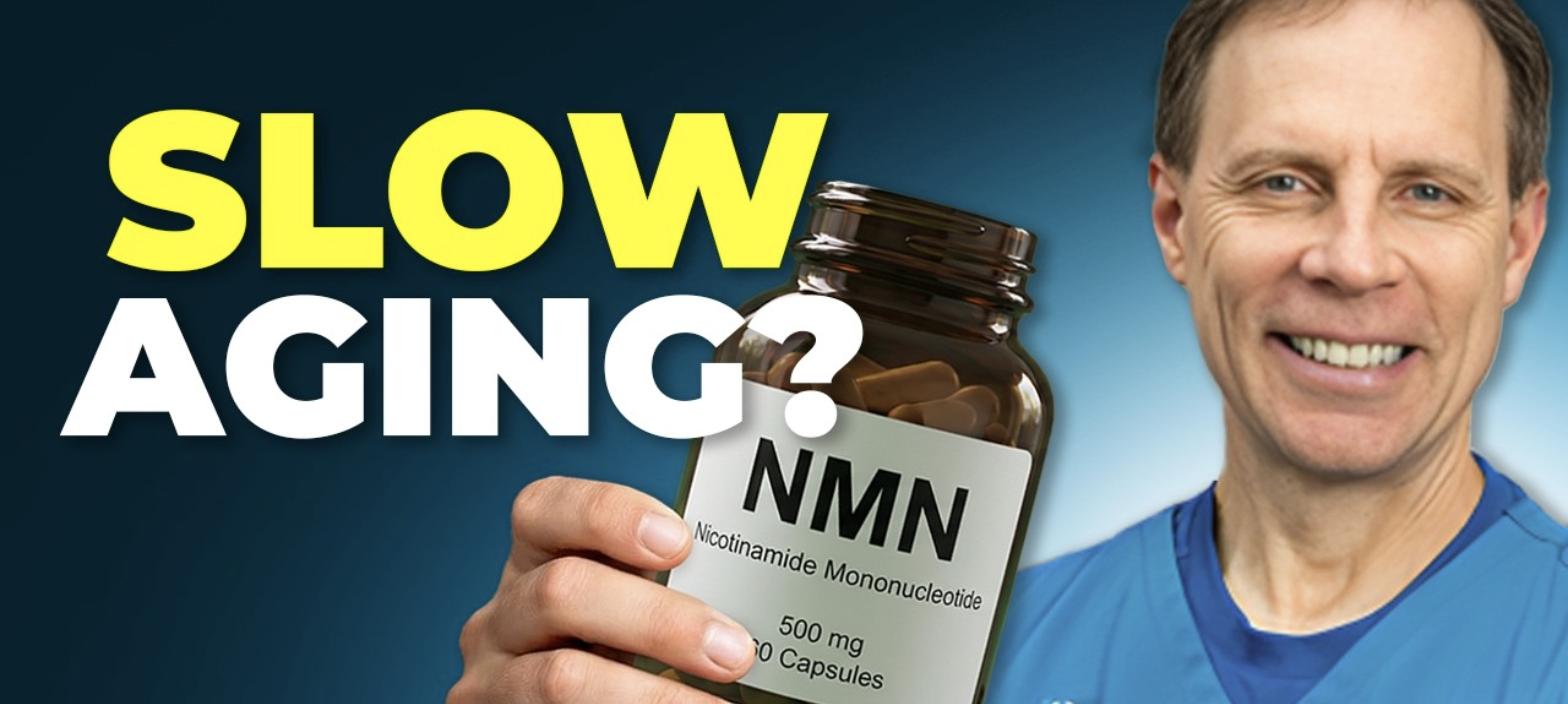

What's all the buzz about NMN, nicotinamide mononucleotide, or NMN? Really it's quite a buzzword in the last couple years, used to support energy levels as an anti-aging compound. So in this video, I'm going to get into what is the credible research about NMN, and really what is it? Well, NMN is a nucleotide, a molecule composed of a phosphate group, a ribose sugar, and a nicotinamide base. Really, it's a derivative of vitamin B3. You're familiar with niacin, it's really a derivative of to that. And NMN is essential for cellular energy production and DNA repair. More than that, it's a coenzyme that's fundamental to cellular metabolism, and again, to support energy production. But there's more than that. It acts as a signaling molecule to regulate cellular processes, including, like I said, DNA repair, what we call epigenetic modifications, where you can rearrange the DNA in responding to the environment, immune responses, and NAD, like I said, it's a derivative of of niacin, but it's really made from tryptophan and niacin. And this is what we call NMN. It also influences the aging process and metabolic balancing. Now, NMN is rapidly converted into NAD upon ingestion. And as you may know, NAD is used in the cells for cellular energy production and as an antioxidant. And NAD levels decline with age in a variety of organisms, including humans. And so NAD, which NMN helps to support naturally, NAD supports energy metabolism. It's involved in cardiovascular health, also protecting the nervous system. NAD is involved in DNA repair, and it has anti-inflammatory and anti-aging effects. And again, these are all things that are in the published literature. Well, the problem is, if you have decreased NAD levels, then that's going to increase your risk of cognitive decline, possibly cancer, metabolic diseases, sarcopenia, where you're getting a wasting in your muscle tissue, you'll be more frail, you can be more prone to eye diseases, degeneration of the brain and nervous system, and a wide variety of age-associated diseases. And NAD is constantly synthesized, broken down, and recycled in the cell to sustain stable levels. You need it to be able to basically live. And reduced levels of NAD again are related to aging. And if you're having a diet possibly that's too high in fat and sometimes too high in protein. So, the goal is to slow down reverse these disease conditions by restoring NAD levels, and NMN helps to do that. Now, there's emerging research now suggesting a close link between NAD levels, aging, and an increased risk of again, several serious diseases including the heart disease, the degeneration of the nervous system. And we know that when they examined human skin samples, they found that when there's an accumulation of DNA damage, oxidative DNA damage, increased lipid peroxidation, that there's a significant decline in NAD levels in the skin as well. So, now we can see NAD plays a role in skin health as well. When they've collected data on human livers, it indicates that a 30% loss of NAD occurs between the ages of 45 to 60 and older. And two independent MRI studies of the brain revealed a 10 to 25% decline in NAD levels from adolescence to old age. So, the beneficial effects of NAD and the precursors to it are centered around the influence again on cellular metabolism, stress responses, and DNA repair. And ensuring NAD activity is critical. So, NMN has emerged as a promising candidate for boosting NAD. As a direct precursor to NAD, NMN readily converts within cells, potentially mitigating the age-related NAD decline. So, I'm using NMN a lot of my patients to support their NAD levels, and NMN does have its own independent studies. I'm going to review some of those with you right now. So, in terms of safety, See, been 10 studies including 437 patients with a mean age of 58 years and a follow up on average about 9.6 weeks. And the doses for NMN range between 150 to 1200 mg daily. And in those studies they found that NMN was very well tolerated with no serious adverse effects. Another study I want to tell you about is a randomized double blind placebo controlled study involving 108 participants. And either they took 250 mg of a placebo given once a day or NMN for 12 weeks in the morning or the afternoon. And the results were pretty significant. Researchers found significant improvements in physical performance when they measured like their ability to sit to stand five times as well as drowsiness. They found a substantial improvement in older adults. In addition, sleep duration and other sleep scores improved as well with the NMN supplementation. Now, let's talk about a study with runners. In this six-week randomized double blind placebo controlled forum clinical trial, it involved 48 young and middle-aged recreational trained runners. And the participants randomized into four groups. The low dose group of 300 mg a day of NMN, the medium dose 600 mg, a high dose group of 1200 mg, and then there was the control group which was the placebo group. Now, each group consisted of 10 male participants and two female participants. Each training session was about 40 to 60 minutes and the runners trained five to six times each week. And here's what the researchers found. NMN increases the aerobic capacity of the runners during exercise for the 600 mg and 1200 mg groups. The improvement was likely the result of enhanced oxygen utilization of the skeletal muscle. So, very interesting mechanism as to how this helped the runners. Well, these are just a few of the studies I could cite, but the point being is NMN helps to support cellular energy production. It appears to help also with training. It appears to have anti-aging effects. So, I do use a lot with patients. As I've shown in the studies, very safe to use. Well, hope you found this video helpful. Look for other videos on my YouTube channel. Click the like button if you like this video, and I'll look forward to talking with you soon.
MEDICAL DISCLAIMER: This video is for general information and educational purposes only and does not constitute the practice of medicine, the giving of medical advice, or the establishment of a doctor-patient relationship. The information provided is NOT intended to be a substitute for professional medical advice, diagnosis, or treatment, and is NOT intended to treat, diagnose, cure, or prevent any disease or medical condition. Always seek the guidance of your physician or qualified healthcare provider with any questions you may have regarding a medical co


