
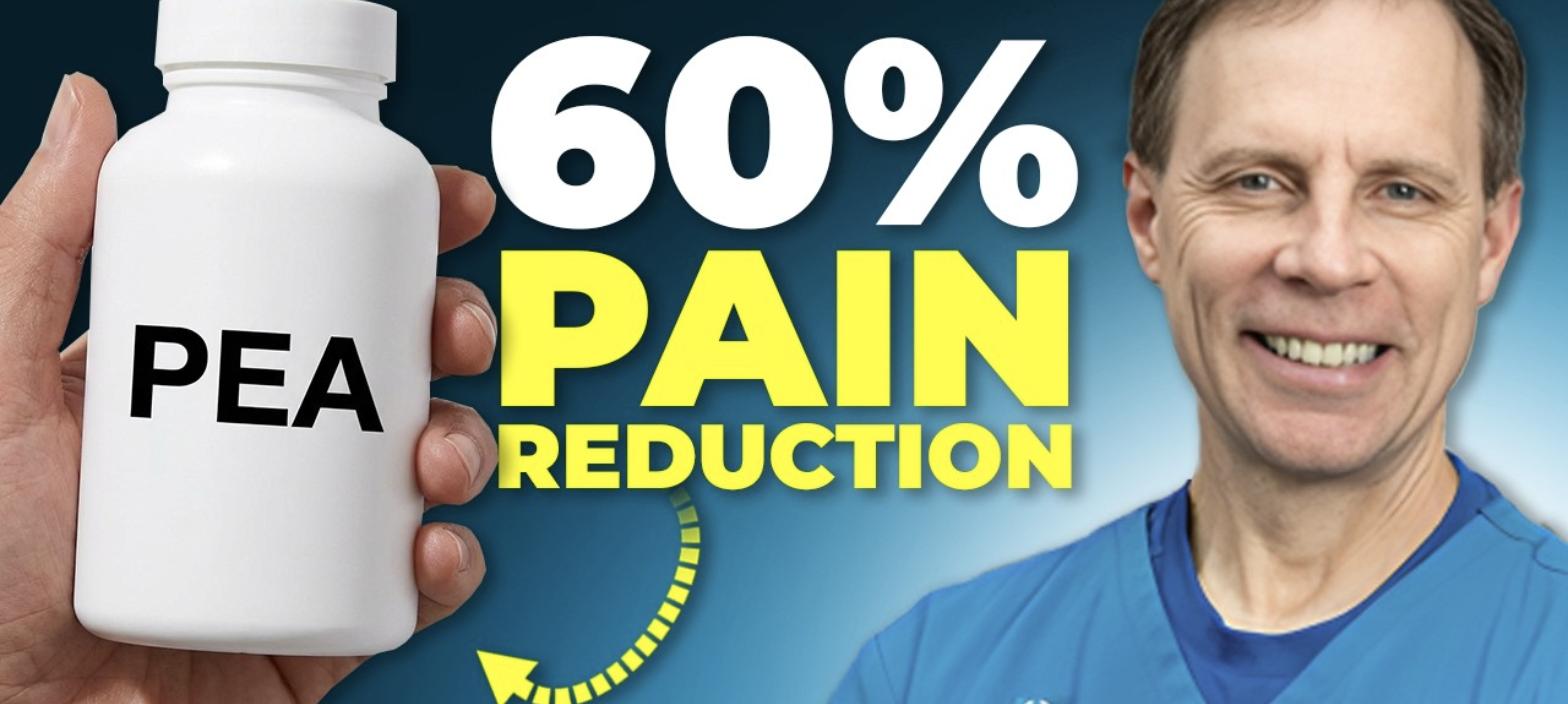

Are you suffering from pain, chronic pain, and you're looking for natural ways to relieve your pain? While you watch this video, I'm going to go through a breakthrough in the natural product industry for a supplement known as PEA. So, as you watch this video, you're going to understand the science behind PEA and why it's a really a valid way to help to decrease your pain levels. You know, so many people have problems with chronic pain, sciatica, low back pain, neck pain, various reasons why people have pain. And millions of Americans resort to using nonsteroidal anti-inflammatory drugs, you know, the ibuprofen, the Tylenol. Then there's the prescription medications, especially the opioid family. And we all know what a problem that has been for addiction and even death for so many people. But what do we have in the natural products, in the natural supplements, which is really effective for pain? Yes, we have things like bromelain. We have turmeric, which is decent. But really the best by far, in my opinion, is PEA. And PEA stands for palmitoylethanolamide. And this is a natural substance, a natural agent you find in foods like egg yolks, for example. You find it in soy lecithin, albeit in very small amounts. But you can concentrate it and take it in supplement form. And the studies on PEA are quite amazing, and there's many of them. So, let's go over the things that PEA can do for you. First of all, PEA is known as a broad-spectrum analgesic. So, it has a general pain-relieving effect. More than that, it's also anti-inflammatory. In addition, it's neuroprotective. It helps to not only relieve nerve pain, but protect the nerves from damage. In a 2023 systematic review and meta-analysis of 11 double-blind randomized controlled trials, or well-designed studies, patients had different types of pain that they studied. They had gynecological pain, say, like menstrual cramps, neurological pain, so nerve pain, pain of the muscles and skeleton, and also irritable bowel syndrome, where you can get that abdominal cramping type of pain. And what they found in nine of the 11 studies was that PEA had significant pain-relieving effects. Now, in those studies, the dosage that was used ranges between 300 to 1,200 mg daily. Also, PEA has good studies on for joint pain. In 2021, they did randomized double-blind study comparing 350 mg of a type of PEA product compared to placebo for reducing joint pain in adults. And in this 2-week study, they found that the pain scores were significantly reduced in those taking PEA versus placebo. So, definitely it's a supplement you should use if you're having more than mild joint pain. Now, nerve pain I mentioned before, and they've done eight clinical trials involving over 1,300 people, and they found that PEA was safe and effective for treating sciatica pain, low back pain, and carpal tunnel syndrome. And let's face it, those of us in clinical practice, we know those conditions can be difficult to treat. In addition, they did a study of 636 patients who had sciatica, and they used a doses of 300-600 mg of PEA and compared it to placebo. And after 3 weeks, those who took the PEA at 600 mg a day had a 60% reduction in their pain levels. Well, I hope you're enjoying the video. If you're looking for quality supplements, go to my website drstengler.com. And there you can see the nutritional supplements I've been using with my patients for many decades. They involve a lot of scientific research. Many of them I've created myself. So again, thank you for watching the video, and check out my supplement store at drstengler.com. Well, how about migraine headaches? That's certainly a type of pain. And migraine headaches are difficult to treat sometimes with natural products. But PEA did very well. In 2022, they did a double-blind study comparing PEA to placebo for adults with migraines. And so, at the start of a migraine, when a migraine was coming on, the participants took the PEA mg or placebo. And then they record their pain scale every 30 minutes for 4 hours or until the migraine went away. If the migraine had not resolved at the 2-hour mark, then a second dose was given. So, what they found was those who took the PEA resolved more headaches, had a lower pain score, and reduced the need for acute migraine medication more significantly than placebo. So again, that's really putting it to the test when you can help migraine headaches. Now, what about the safety of PEA? Because when you look at pain-relieving products, especially the pharmaceutical drugs, obviously they have problems with liver toxicity, kidney toxicity, can create heart problems, clotting problems. But PEA is very safe. Matter of fact, over 50 years, the studies have shown that up to 1,200 mg a day really does not have any harmful effects. In one study, the researchers stated the following, quote, "Numerous clinical trials involving more than 1,500 subjects have demonstrated no adverse effects with doses of 300 to 1,200 mg per day being studied extensively in both healthy and sick populations." So anyways, PEA is very safe and is quite effective. So, I use it a lot with my patients. For those with acute and chronic pain, I'll use PEA around 600 mg a day up to 1,200 mg a day. That's more acute, serious type pain. Sometimes I'll combine it with a highly absorbable turmeric product as well. That's a nice synergistic combination. In any event, if you're suffering from pain, if you know people who are suffering from pain, talk to your health care provider about the use of PEA. It really is quite a breakthrough in the natural product industry. For more videos on terms of chronic health disease, acute health problems, problems with pain, see more videos on my YouTube channel.
MEDICAL DISCLAIMER: This video is for general information and educational purposes only and does not constitute the practice of medicine, the giving of medical advice, or the establishment of a doctor-patient relationship. The information provided is NOT intended to be a substitute for professional medical advice, diagnosis, or treatment, and is NOT intended to treat, diagnose, cure, or prevent any disease or medical condition. Always seek the guidance of your physician or qualified healthcare provider with any questions you may have regarding a medical condition. Do not delay or disregard seeking professional medical advice based on anything contained in this video. Do not make any changes to your health regimen, medications, or supplements without first consulting your physician or healthcare provider. Dr. Mark Stengler assumes no liability for any direct or indirect losses, damages, or adverse outcomes that may result from use of the information in this video. All content is provided for educational purposes only and is subject to change without notice.


