
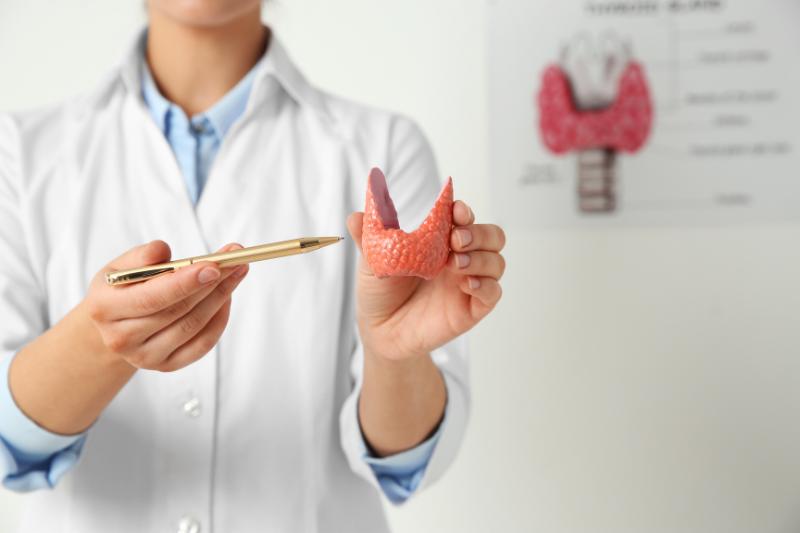

Dr. Stengler: In this edition of Doctors Say the Darndest Things, I'm going to talk about a claim made by a medical doctor on thyroid supplements. In an interview with the well-known conventional website Medscape, Dr. Bernett — who served as past president of the American Thyroid Association from 2020 to 2021 — made a few statements regarding thyroid supplements. His first claim was essentially that thyroid supplements have no efficacy or benefit in the human body in terms of their effect on thyroid function and thyroid hormone production.
That's quite a claim, because first of all, in my own research I found studies showing benefit from thyroid supplements. Second, if you look at the thyroid, there are many nutrients involved in producing thyroid hormone — I actually have a video on my YouTube channel covering the most important nutrients for improving thyroid function. Later in this video I'll also address a second claim he made regarding dietary supplements. But let's start with the first: that thyroid supplements have no benefit or efficacy. Let's look at the research.
Starting with vitamin D — a meta-analysis published in the journal Cureus in 2024 looked at thyroid hormone levels in adults with autoimmune thyroid disease, also known as Hashimoto's thyroiditis, which is the most common cause of hypothyroidism. About 85% of people with low thyroid have it because of autoimmune thyroiditis. In this meta-analysis, researchers found that three out of seven studies demonstrated a statistically significant decrease in mean TSH levels. TSH — thyroid stimulating hormone — is released by the pituitary gland and goes up when the body needs more thyroid hormone and down when it doesn't. A decrease in TSH indicates that vitamin D was having a beneficial effect on thyroid function. In addition, two of those three studies demonstrated a statistically significant improvement in T3 levels — triiodothyronine, the most metabolically active thyroid hormone in the body. And six of seven studies found a statistically significant improvement in T4 levels when vitamin D was administered for longer than six months.
A second study, published in the journal Medicine in 2023, reviewed 12 studies in adult patients with autoimmune thyroid disease and found that vitamin D treatment lasting longer than 12 weeks demonstrated significant increases in free T4 and free T3 levels compared to shorter treatment durations.
Moving on to selenium — a 2024 meta-analysis published in the journal Thyroid involved 35 randomized controlled trials looking at the effects of selenium supplementation, typically 200 micrograms, on thyroid function. It demonstrated that selenium supplementation decreased TSH in patients who were not on thyroid hormone replacement — again indicating an improvement in thyroid hormone levels.
Now let's look at the combination of myo-inositol and selenium. A study published in the journal Clinical Medicine Insights: Endocrinology and Diabetes in 2024 investigated the therapeutic efficacy of selenium alone compared to the combination of myo-inositol and selenium in patients with autoimmune thyroiditis. This analysis included two randomized controlled trials and one observational retrospective study, with about 288 patients total. Researchers concluded that the combined therapy significantly reduced TSH levels in patients with subclinical hypothyroidism.
Another study, published in Frontiers in Endocrinology in 2022, used 600 mg of myo-inositol and 83 micrograms of selenium in patients with subclinical hypothyroidism — where TSH is elevated but T4 and T3 levels are still normal. This six-month study with 148 patients found that TSH levels were significantly reduced after just three months of treatment. The authors concluded that these two natural agents appear to balance TSH fluctuation and restore values within the physiological range.
So we've looked at vitamin D, selenium, and the myo-inositol and selenium combination — and we can clearly see that nutrients can benefit thyroid hormone levels, including in some studies involving people already on thyroid medication. The claim that thyroid supplements have no efficacy simply isn't accurate. Perhaps Dr. Bernett hasn't reviewed the studies from the last couple of years.
Now let's look at his second claim — that many thyroid supplements are contaminated and may contain things like cortisol or thyroid hormone. He gave a few case examples. When I looked at the review study he published back in 2014, he did cite some published cases where there were issues with specific thyroid supplements. However, that doesn't mean thyroid supplements as a category are problematic. The FDA does have regulatory oversight of supplements manufactured in the United States — quality control investigations are required. In fact, if you go to the FDA website, it states that both the FDA and the FTC share responsibility for the oversight of dietary supplements, with the FDA generally responsible for safety, quality, and labeling. They can and do take products off the market when warranted.
Can there be problems with dietary supplement manufacturers? Of course — sometimes intentionally, sometimes by mistake. But the same thing happens in the pharmaceutical industry. Dr. Bernett would be well advised that when commenting on thyroid supplements, he should also account for the recalls that have been done on thyroid medications. A quick search will show that the FDA has recalled prescription thyroid hormones in recent years — several brands, including commonly used levothyroxine products, T3 products, and combination products. This happens on both sides of the field. To suggest it's only a problem with dietary supplements is not a fair or balanced position.
I hope you found that video helpful. You can find other videos on my YouTube channel and articles on integrative medicine topics at markstengler.com.
In this video, we break down the latest science on vitamin D, selenium, and myo-inositol, and their real impact on thyroid health. You’ll see why blanket claims about supplements just don’t hold up. Plus, we expose the truth about FDA regulation and why both supplements and medications can face recalls. Watch now to cut through the myths and get the facts.


