
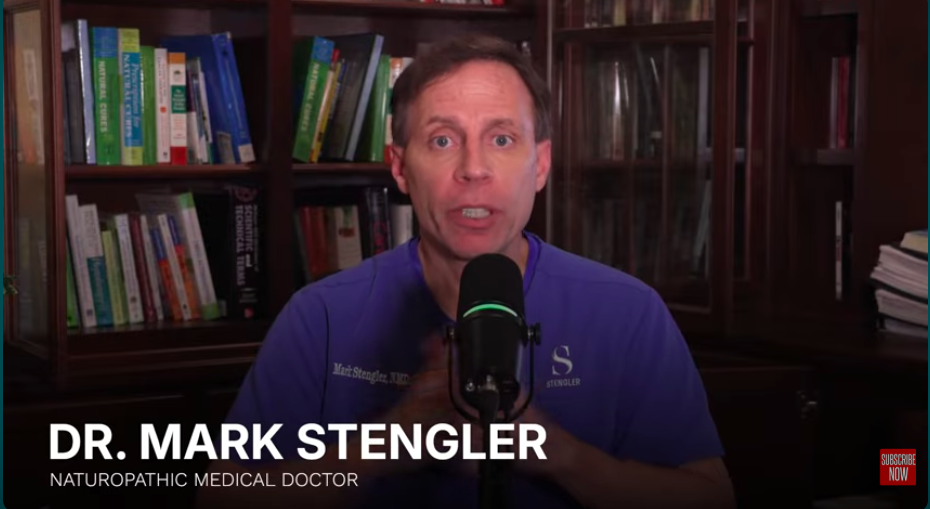

Dr. Stengler: N-acetylcysteine is a powerful supplement, but most people don't know what to use it for and how to use it. In this video, I'm going to talk about all the important facts you need to know about N-acetylcysteine. Some people refer to it as NAC.
N-acetylcysteine is a very potent antioxidant in the body, and it neutralizes harmful free radicals that can damage your cells. It's also very important because it increases the body's glutathione levels, which are possibly the most powerful antioxidant in the body. NAC is used to support liver and kidney detoxification, and we use it to support immunity. Hospitals actually use NAC for very specific purposes, which shows the power behind the science. NAC is given to patients who have overdosed on acetaminophen to prevent liver damage or toxicity. It's also used orally and by nebulization, where you breathe it in to reduce mucus thickness and promote drainage in the respiratory system.
In holistic medicine, we use NAC for many reasons. Number one, we use it for upper respiratory problems as well as the lungs — for sinusitis, bronchitis, and pneumonia, because it has the unique property of breaking up mucus and thinning it so your body can drain it better. NAC is also an anti-inflammatory, so I'll use it for patients with bronchitis, pneumonia, chronic obstructive pulmonary disease (COPD), sinusitis, or any condition where mucus is a problem in the respiratory system, including post-nasal drip. There are different doses: most people use between 600 and 1,200 milligrams per day, but you can use up to 4,000 mg in people with chronic bronchitis or COPD for a more powerful effect. I also like to use it as a nebulized breathing treatment, and NAC needs to be prescribed by a doctor for that.
In terms of the immune system, as we're getting into the fall and winter, NAC is great for immune function. It's been shown in studies to improve natural killer cells — these are like Navy SEALs that go around through your bloodstream and kill bad bugs, viruses, bacteria, fungi, even cancer cells. In one study, only 25% of people given NAC for six months got the flu when taking it for immune protection, versus 79% who took a placebo. NAC is also a great supplement to improve liver function, because it's anti-inflammatory, an antioxidant, and it enhances glutathione, supporting your detox pathways. It can help with fatty liver, which occurs so commonly in Americans.
Let's look at it for kidney protection. It's one of the few agents shown to protect against kidney injury from contrast dyes used in imaging. The protective effects are thought to be due to its antioxidant and vasodilating actions, improving blood flow through the kidneys, and it's been shown in some studies to prevent apoptosis, or kidney cell death. Studies have been somewhat mixed, but a study published in the Journal of the American Heart Association reported that NAC supplementation was associated with a significant decrease in kidney injury from contrast dye. The dosages varied greatly; I normally have people take 600 to 1,000 milligrams a few hours before their contrast dye study and another 600 to 1,000 milligrams afterward to support that kidney detoxification.
NAC also helps with mood disorders. There have been studies in journals like Neuroscience and Biobehavioral Reviews, where researchers found favorable evidence for the use of NAC in several psychiatric and neurological disorders, particularly autism, Alzheimer's disease, cocaine and cannabis addiction, bipolar disorder, depression, conditions where people pull their hair (known as trichotillomania), nail biting, skin picking, OCD, schizophrenia, drug-induced neuropathy or nerve damage, and progressive myoclonic epilepsy — and they note it's very safe in terms of tolerance. NAC has a balancing effect on the neurotransmitter glutamate, which is excitatory, and it's been shown to help with dopamine balance, because imbalanced dopamine can cause low motivation and depression. A typical dose for most people would be 1,000 to 1,200 mg one to two times daily, best taken on an empty stomach. People on psychiatric medication should check with their doctor first.
Overall, NAC is a very safe supplement to use, and the average person will do very well with it. I hope you found this video effective — now you know how to use NAC for different conditions and the doses. If you want to find more videos on detoxification, helping your immune system, and the best supplements with the best studies, look for more videos on my YouTube channel.
Most people have heard of Vitamin C or E, but N-acetylcysteine (NAC) is the unsung hero of the antioxidant world. As a precursor to Glutathione, NAC provides the raw materials your body needs to protect its cells from the inside out.
In this video, Dr. Mark Stengler, NMD, breaks down the clinical applications of NAC—ranging from its life-saving use in hospitals to its role in daily immune and mental health support.
CHAPTERS
00:00 What NAC Is and Why It Matters
00:19 NAC, Glutathione, and Antioxidant Power
00:35 Medical Uses of NAC in Hospitals
01:00 Respiratory, Sinus, and Lung Support
02:10 NAC for Immune, Liver, and Kidney Protection
03:48 NAC and Mental Health Applications
04:40 Proper Dosing, Safety, and How to Take NAC
🔔𝐃𝐨𝐧'𝐭 𝐟𝐨𝐫𝐠𝐞𝐭 𝐭𝐨 𝐬𝐮𝐛𝐬𝐜𝐫𝐢𝐛𝐞 𝐭𝐨 𝐦𝐲 𝐜𝐡𝐚𝐧𝐧𝐞𝐥 𝐟𝐨𝐫 𝐦𝐨𝐫𝐞 𝐮𝐩𝐝𝐚𝐭𝐞𝐬.
🔗 Stay Connected With Me.
Facebook: / markstengler Instagram: / markstengler Website: http://drstengler.com/


