
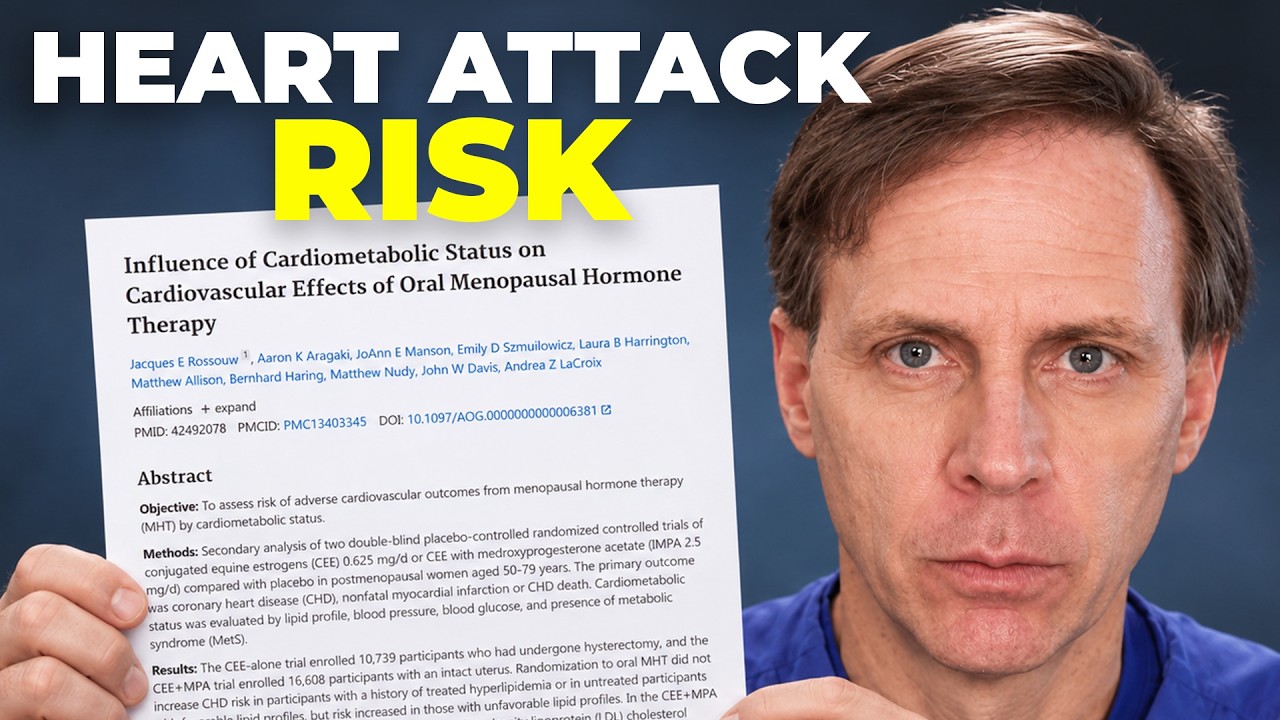

Is estrogen replacement a problem for women now? According to a new study? Well, the headline of a new study reads, "It's best to control LDL cholesterol before starting hormone replacement therapy." Sounds reasonable, right? But if you read the study behind it, you'll see this was never a study of hormone therapy as most integrative doctors practice it. It was a study of two synthetic and animal derived drugs taken by mouth in women who average more than a decade past menopause. And headline is now being applied to every woman considering hormones. I'm Dr. Dr. Mark Stangler and today I'm going to show you what this paper found, what it didn't test, and why that matters for you. A new report in obstetrics and gynecology reanalyze the women's health initiative known as the WHI study trial. That's more than 27,000 women in two randomized trials. One trial gave oral conjugated ecoin estrogen alone to women without uterus. The other gave that same estrogen plus a synthetic progesterine called medroxy progesterone acetate or MPA to women with a uterus. This is not new data. It comes from research 25 to 30 years ago. The researchers sorted women by baseline LDL cholesterol levels and other risk factors and asked who had more heart attacks and coronary deaths on hormones. Well, here's what they found. Women on statins or with favorable lipid levels had no increase in coronary risk from hormone therapy. In women with an LDL under 130, the trend actually pointed toward lower risk. But in women with an LDL of 109 or higher, which is pretty high, who took the estrogen plus the medroxy progesterone and acetate combination, coronary risk was 2.8 times higher than placebo. Now, let's really look what was going on with this study. The estrogen in this trial is conjugated equin estrogen known as preman. It's made from the urine of pregnant horses mars. It contains a mix of estrogens including equalent and other horse estrogens that the human body never makes. My friends, of course, that is not bio identical. Now, the progesterone progesterone acetate is also a synthetic molecule. It's not progesterone. It was engineered to act like progesterone, but it behaves differently in your body, including on blood vessels and on cholesterol. Now, the difference is well documented. In the Pepe trial, a landmark randomized trial, women on oral estrogen or pills of estrogen, saw their HDL, the protective cholesterol, rise. Adding hydroxy progesterone, the synthetic progesterone blunted that rise. But if you added micronized progesterone, which is biioidentical to the progesterone in your body, it preserved more of the good HDL benefit. So when this paper says risk rose in the high LDL group on estrogen plus progesterine, the honest reading is this. Risk rose on the synthetic estrogen and progesterine. Even the Medscape AI summary that came with the commentary reviewing a study admits that certain progesterines or synthetic progesterones can lower the good HDL and raise the bad LDL. So the progesterine really is a suspect here because again it is synthetic. Now here's the second problem. How the hormone gets into your body. Every hormone in this study was swallowed. When you swallow estrogen as an oral pill, it goes straight to your liver first. That first pass changes the liver's output of clotting factors, inflammatory markers like C reacttor protein and fats in the blood known as triglycerides. Now transdermal or toxical estrogen delivered through a patch gel or cream goes into the bloodstream and skips that first pass. And this isn't just theory. In the French study known as the Esther study, oral estrogen was linked to a high risk of Venus blood clots while transdermal estrogen was not. A United Kingdom study of stroke found that lowd dose toppable estradile was not associated with increased stroke risk while oral estrogen was. And a large 2019 analysis of more than 8,000 women found that oral estrogen was tied to higher clot risk while transdermal or tophal estrogen was not. Hey, one second. If you're looking for help with any type of health issue, I put together a line of doctor grade supplements that I formulated myself. They're the same formulas I use with my patients. Click the link below to check them out. Okay, back to the video. And we look at the Medscape commentary on this study. Uh, one of the co-authors of the paper said that additional research is needed to understand whether elevated LDL poses similar risks with transermal estrogen or estradile as compared with these, you know, nonhuman types of hormones. So, the authors are telling you really that the study didn't really test um the way women are commonly using hormones today. Now, let's look at the third problem. Who are the women in the study? Well, the WHI enrolled women's aged 50 to 79 with an average age in the low 60s. Most were 10 years past menopause. Many already had years of silent plaque building in their arteries. The timing matters. In the elite trial, women who started estrogen within six years of menopause slowed the progression of artery thickening compared with placebo. Women who started later did not. In the keeps trial, recently menopausal women on either oral estrogen or transermal estrogen, both using micronized natural progesterone, showed no worsening in artery thickness over four years. So starting hormones early with biocal hormones is a completely different situation from giving synthetic hormones to women who are decades into their cardiovascular aging. Now no one is saying that topical or transermal estrogen has a protective effect against LDL coronary risk especially in older women. But what we have to show is on the studies that have been done so far they have not shown that transdermal estrogen is a risk factor for cardiovascular disease. So that's very important in terms if you're a woman using hormone replacement. You don't need to be scared if your LDL is alvate to some degree if you're using the topical or transermal estrogen which is really the best way to use it. And of course uh when you're using progesterone you should be using the micronized progesterone the biioidentical form not the progesterone. And it's actually pretty rare nowadays that I see many doctors prescribing um these nonbiioidentical hormones to patients. Now again, transermal estrogen or top estrogen based on the studies that have been done does not increase clot or stroke risk the way the oral form does. And so this is very important for doctors to understand, for patients to understand because the media isn't going to differentiate with these two studied forms of hormone replacement. So here's what I want you to take away of this study. First, the study tested oral conjugated ecquin estrogen, which is horse estrogen, plus synthetic progesterone, known as hydroxy progesterone. They did not test the biodic hormones that most doctors use today. Two, it did not test transal delivery, which bypasses liver and has a different clot and stroke profile. And three, the rift signal was concentrated in one group and that was women with an LDL cholesterol of 190 or above who were taking in this synthetic hormone combination. Women with controlled or favorable lipid showed no increase in coronary risk. So, when you see a headline that says hormone replacement therapy and cholesterol, you've got to start remembering what I've been talking about in this video because again, you probably get a slanted biased view of risk of hormone replacement. And so many women are benefited in pmenopause and menopause by the proper use of biioidentical hormone therapy. We've seen thousands of patients throughout the years have their life quality enhanced greatly. So share this video with a friend or family member who's been told to stay away from hormones based on studies using it in these synthetic hormones. And you can listen to more about hormone balance on my podcast, Health Breakthroughs with Dr. Stangler. And you can also find my supplement formulations at drstangler.com. Well, I'm Dr. Mark Stangler. Thanks for watching and I'll see you in the next video.
A new study on hormone therapy is making headlines, but the real story is in the details. In this video, I break down why this research only tested synthetic and animal-derived hormones taken by mouth, how bioidentical and transdermal estrogen compare, and what the data actually show about LDL cholesterol, heart risk, and hormone replacement for women in perimenopause and menopause.


