
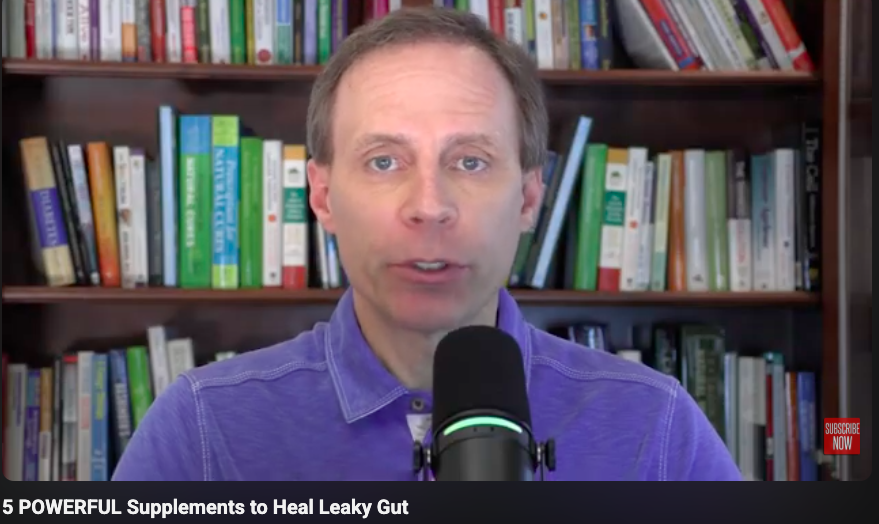

Dr. Stengler: What are the top supplements for leaky gut? There are so many supplements out there promoted for healing leaky gut, but what are the best ones? Over the years, working with thousands of patients, I've found that the right supplements can greatly accelerate leaky gut healing and alleviate symptoms like gas, bloating, and abdominal pain. They're also very effective for helping the whole body, because gut health connects to the rest of the body.
In research on leaky gut syndrome, when you have inflammation in the gut, you start absorbing molecules you shouldn't. They cross the small intestine layer — the epithelial layer — into the bloodstream, and that creates inflammatory reactions in different parts of the body. So it's very important that we heal leaky gut. When you use the right supplements in combination with a healthy diet, proper exercise, stress reduction, and sleep, I find you can decrease healing time by about 75%.
Fortunately, our small intestine layers produce stem cells, and these stem cells regenerate the cells of the small intestine where absorption takes place. If you give the small intestine the right environment, within two to three days you can have new intestinal cells. This is what published studies show, and I discuss it in my book, The Holistic Guide to Gut Health. But you have to give that layer the right nutrients, because many nutrients are involved in healing the gut. Let's review the top five supplements so you can accelerate your gut healing.
Supplement number one: glutamine. This amino acid is the most available free-form amino acid in the body. Your muscles use it, but your small intestine uses it as well. Studies show that glutamine plays a role in helping the small intestine cells turn over and regenerate. Normally I recommend patients take 2,000 to 5,000 milligrams a day, split between a couple of meals. Your body does make it, and you find it in foods, but if you have leaky gut and we want to accelerate healing, glutamine is very helpful.
Supplement number two: DGL licorice. DGL stands for deglycyrrhizinated licorice. This is an extract from licorice root, which appears in many traditional Chinese, Asian, and European medicine formulas. It's anti-inflammatory, soothing, and healing, and it modulates the immune system. The DGL form has a portion of the glycyrrhizin removed, which in high amounts may elevate blood pressure in some people. It's actually not that common, but we use the DGL form for many people when using higher doses. DGL improves circulation to the small intestine, but even more importantly, it helps reestablish the natural mucous layer — the mucin layer — of the small intestine. This is a natural barrier against insult and injury. It creates healthy cells, and healthy cells mean healthy absorption. I recommend people take one to two chewable tablets before each meal, or you can use the powder form and take about 500 milligrams of the concentrated powder before a couple of meals a day. DGL is very safe and very effective.
Supplement number three: aloe vera. You may have seen aloe vera juice in health food stores. Food-grade aloe vera juice can be very effective at having an anti-inflammatory effect on the lining of the intestines. With my patients, I normally use it in supplement form — a powder that people mix in water. Aloe vera has been shown in published studies to help control symptoms of irritable bowel syndrome, and it has good anti-inflammatory effects, so it's one of the top supplements to use.
Supplement number four: quercetin. Quercetin is a great natural antihistamine. We have a high concentration of cells in the gut, including the small intestine, where histamine can be released. Until you heal leaky gut, many people release excessive amounts of histamine, which causes digestive pain, discomfort, and cramping. Quercetin naturally acts as an antihistamine, reducing the activity of histamine released by certain cells in the small intestine lining. Doses of about 100 to 500 milligrams a day are very effective for gut health.
Supplement number five: digestive enzymes. Full-spectrum digestive enzymes break down proteins, fats, carbohydrates, gluten, lactose, sucrose, and many other compounds we're exposed to in the diet. When you break your food down better, you're not irritating the small intestine lining, as can happen with undigested food. You also get better absorption, and as you absorb more nutrients into the body, that promotes overall healing.
These are the top five supplements for people trying to heal leaky gut syndrome. They greatly accelerate healing — reducing the time to feel better by about 75%, in my opinion. I hope you found this video helpful. You can look for other videos on leaky gut syndrome on my YouTube channel.
Struggling with Gas, Bloating, or Leaky Gut? Here's What Your Gut Really Needs.
If you're dealing with digestive discomfort — like bloating, gas, or food sensitivities — the root cause may be increased intestinal permeability, also known as leaky gut. In this must-watch video, Dr. Mark Stengler explains how targeted natural supplements can help repair the gut lining and restore optimal digestive function.
You’ll learn about:
✅ Deglycyrrhizinated Licorice (DGL) – a powerful gut-soothing herb
✅ Nutrients that seal and heal the intestinal lining
✅ How integrative medicine identifies and treats the root causes
✅ Simple steps to relieve symptoms like gas, bloating, and fatigue
✅ Functional tools to improve gut health from the inside out
Whether you're just beginning your gut-healing journey or looking to optimize results, this video is packed with practical, proven strategies to support your digestive health naturally.
👉 Watch now and take the first step toward true gut restoration.
🔔𝐃𝐨𝐧'𝐭 𝐟𝐨𝐫𝐠𝐞𝐭 𝐭𝐨 𝐬𝐮𝐛𝐬𝐜𝐫𝐢𝐛𝐞 𝐭𝐨 𝐦𝐲 𝐜𝐡𝐚𝐧𝐧𝐞𝐥 𝐟𝐨𝐫 𝐦𝐨𝐫𝐞 𝐮𝐩𝐝𝐚𝐭𝐞𝐬.
🔗 Stay Connected With Me.
Facebook: / markstengler Instagram: / markstengler Website: http://drstengler.com/


