
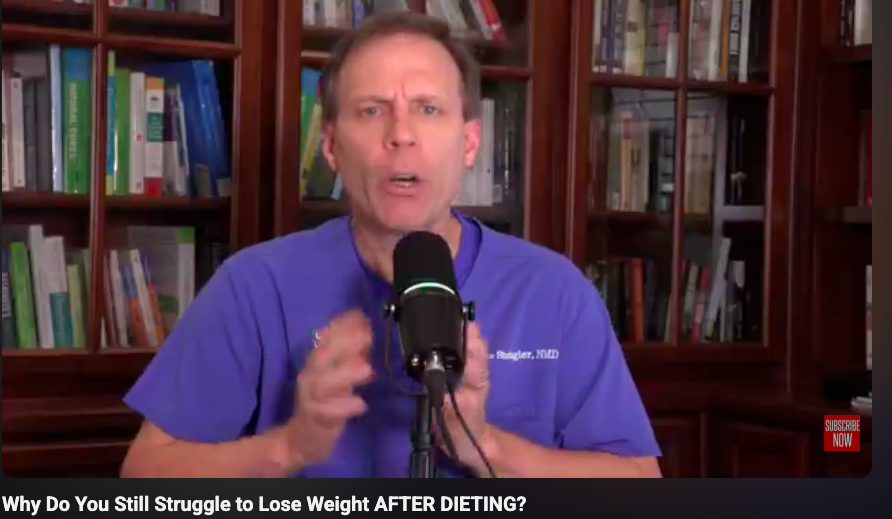

Dr. Stengler: Is there more to weight loss than just calories in and calories out? For decades, people have been told that weight issues come down to the amount of calories consumed versus the amount expended through physical activity. There is some truth to that, but there's a lot more to the picture. In this video, I'm going to go into some of the newer understandings of metabolism and why some people have trouble losing weight even when they're being very diligent with both calories and physical activity.
In America, 75% of adults are overweight or obese, and we have a global epidemic of diabetes. In conventional medicine, the accepted risk factors include unhealthy eating — too many calories, too much saturated fat, too much sugar — lack of physical activity, insufficient or poor-quality sleep, high stress and elevated cortisol, metabolic conditions like pre-diabetes, diabetes, and polycystic ovarian syndrome, genetic factors, certain medications such as antidepressants or steroids like prednisone, and environments that make healthy eating and exercise difficult.
But the idea that weight is only about calories in versus calories out has become obsolete. As the Endocrine Society — a very conventional organization — states, growing evidence indicates that obesity involves processes far more complex than the passive accumulation of excess calories, and it is this complexity that lies at the heart of why obesity is so difficult to treat.
So let's talk about three other models that explain why people gain weight beyond calorie consumption.
The carbohydrate-insulin model — essentially a framework for understanding insulin resistance. When people consume simple carbohydrates, blood sugar spikes and the pancreas releases insulin to transport that glucose into the cells. That's a necessary and normal process. But when we're constantly consuming simple carbs, insulin levels are constantly elevated — and insulin causes fat deposition, particularly around the waist and around internal organs like the liver. Most Americans have insulin resistance due to diet, stress, and lack of exercise. Addressing it means eating a high-fiber, moderately high-protein diet with fewer simple carbs and more complex carbs, along with quality fats. Supplements like berberine have also been shown in studies to be very effective at reducing glucose and insulin levels.
The reduction-oxidation model refers to how efficiently you burn energy in your cells. When we have the right nutrients and our mitochondria — the energy-producing structures in our cells — are burning fuel properly, especially fat, our metabolism functions well. Many people have mitochondrial dysfunction and aren't producing energy efficiently, which over time can contribute to weight gain.
The obesogen model is a theory in which environmental chemicals cause hormonal changes that promote fat deposition. Chemicals like pesticides, phthalates, other plastic-derived chemicals, and heavy metals are theorized to cause the body to store fat as a protective mechanism — keeping those toxins sequestered in fat tissue rather than circulating and damaging vital organs like the brain and heart. Additionally, these obesogens disrupt endocrine hormones related to fat storage, cause abnormal signaling in the brain, increase appetite, and alter the feeling of fullness. These chemicals are found in prescription drugs, insecticides, plastics, household chemicals, solvents, food preservatives, emulsifiers, and other substances.
So what we've learned is that there are important factors beyond calorie counting. I see many frustrated patients who come in having meticulously tracked calories and exercise and still not getting results. That's when we need to look at insulin resistance, mitochondrial energy production, hormone balance, and environmental chemical exposure. There are tests a functional medicine doctor can run to identify where the imbalances lie.
I look forward to sharing more important health information in future videos.
Why Weight Loss Isn’t Just About Willpower
Tired of counting calories and seeing zero results? You're not alone — and you're not broken. In this eye-opening video, Dr. Mark Stengler explains why the old-school “calories in vs. calories out” model doesn’t work for most people… and what does.
✅ Why insulin resistance causes stubborn fat (especially around the belly)
✅ How damaged mitochondria block energy burn and slow metabolism
✅ The real threat of environmental obesogens like plastics, pesticides, and endocrine disruptors
✅ How to fix your metabolism through food, supplements, and smart detox strategies
✅ The functional lab tests that reveal hidden root causes of weight gain
👉 If you’ve hit a plateau, this video could change everything. Learn what’s really sabotaging your metabolism — and how to reset it naturally.
CHAPTERS
00:00 Is It Really Just Calories In vs. Out?
00:31 The Obesity and Diabetes Epidemic
00:47 Conventional Risk Factors That Affect Weight
01:46 Why the Calorie Model Is Obsolete
02:13 Model 1: The Carbohydrate-Insulin Connection
03:10 How to Reduce Insulin Resistance Naturally
03:55 Model 2: Mitochondria and Energy Burn Dysfunction
04:24 Model 3: The Obesogen Effect
05:17 Why This Matters: Weight Loss Frustration Explained
05:47 What to Do Next: Functional Testing and Solutions
05:56 Closing Thoughts: New Tools for Better Health
🔔𝐃𝐨𝐧'𝐭 𝐟𝐨𝐫𝐠𝐞𝐭 𝐭𝐨 𝐬𝐮𝐛𝐬𝐜𝐫𝐢𝐛𝐞 𝐭𝐨 𝐦𝐲 𝐜𝐡𝐚𝐧𝐧𝐞𝐥 𝐟𝐨𝐫 𝐦𝐨𝐫𝐞 𝐮𝐩𝐝𝐚𝐭𝐞𝐬.
🔗 Stay Connected With Me.
Facebook:/ markstengler Instagram:/ markstengler Website: http://drstengler.com/


