
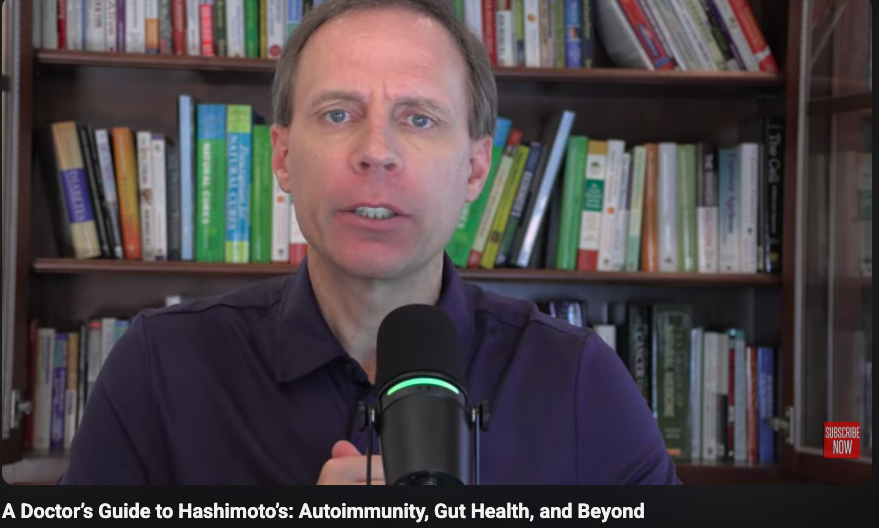

Dr. Stengler: Do you understand what's going on with your Hashimoto's thyroiditis? This is an autoimmune condition where your immune system is attacking your thyroid gland — the bow-shaped gland right below your Adam's apple. I want you to understand why you have Hashimoto's thyroiditis and what you can do naturally to help manage it.
The vast majority of hypothyroidism — low thyroid — is caused by Hashimoto's thyroiditis. In about 85% of people who develop low thyroid function, this autoimmune condition is the cause. Many of my patients have never had their doctor explain to them why their thyroid isn't producing enough hormone. With Hashimoto's, your immune system attacks the tissue in the thyroid gland, creating an inflammatory reaction. Over time, immune cells destroy the thyroid cells that produce thyroid hormone — which is a serious problem, since thyroid hormone is required for energy production, metabolism, cognitive function, liver function, and essentially every major organ system.
Let's talk about the factors that contribute to Hashimoto's thyroiditis. There is a clear genetic predisposition — it runs in families. If your mother, father, or siblings have had Hashimoto's, your doctor should be testing you annually for thyroid autoantibodies — specifically thyroid peroxidase antibody and thyroglobulin antibody. Elevated levels indicate autoimmune activity is occurring.
Beyond genetics, chronic stress is a known trigger for Hashimoto's, as with many autoimmune conditions. Poor dietary habits — a diet high in refined sugars, low in fiber and omega fatty acids — create systemic inflammation and a poor gut microbiome, which has a pronounced effect on immune regulation. There is now a well-established connection between gut microbiome imbalance and autoimmunity, with direct communication between the gut and the immune system, as well as between the gut and the thyroid.
Environmental toxins — heavy metals like mercury, pesticides, and other pollutants — can damage the immune system and contribute to autoimmunity. Certain infections, such as Epstein-Barr virus and some bacterial infections, can heighten immune responses and trigger autoimmune conditions. More recently, COVID-19 has been shown to flare up autoimmune conditions of all kinds. Hormone imbalances also play a role — adrenal hormones like cortisol help modulate the immune system, and both too-high and too-low levels can predispose someone to autoimmunity. Women in perimenopause and menopause with deficiencies in estrogen and progesterone are also at higher risk for autoimmune flares.
Now let's talk about dietary interventions. I recommend a diet rich in vitamins, minerals, antioxidants, and omega-3 fatty acids — a Mediterranean-style diet emphasizing fruits, vegetables, nuts, seeds, lean proteins, cold-water fish like wild salmon, and olive oil. There is good research showing that gluten sensitivity can trigger the antibodies associated with Hashimoto's, so for most patients I recommend a gluten-restricted or gluten-free diet. For many people, antibody levels decrease and thyroid function improves on this diet. I also recommend significantly reducing dairy products, which can act as common allergens and trigger inflammation. Anti-inflammatory foods like turmeric and ginger are beneficial, as are plenty of dark leafy greens.
Stress reduction is critical. Exercise, prayer, and other stress management techniques are very important when you have an autoimmune condition. Sleep is equally important — without a proper sleep schedule, the immune system becomes dysregulated. Aim for 30 to 60 minutes of exercise daily to help calm an overactive immune system. And avoid environmental toxins as much as possible — drink purified, filtered water, and use cosmetics and personal care products free of contaminants like lead and parabens.
In terms of supplements, the three most well-studied for Hashimoto's are: myo-inositol at 600 milligrams per day, which has been shown to help reduce antibody levels and improve thyroid hormone levels; vitamin D, since deficiency is a known risk factor for Hashimoto's — aim for blood levels at mid-range or slightly above to support immune regulation; and selenium at 100 to 200 micrograms per day, which has been shown in several studies to reduce antibody levels and improve thyroid hormone production.
If you work on diet, exercise, hormone balance, and incorporate these three key nutrients, you'll likely find — when monitoring your blood work over about six months — that antibody levels come down and thyroid hormone levels improve. If you're trying to avoid needing thyroid medication, these preventive steps are essential. If you're already on thyroid hormone replacement, incorporate these protocols anyway — they will help preserve your thyroid function, reduce the need for higher medication doses over time, and in some cases, within 6 to 12 months, patients are able to reduce or even discontinue their medication as their thyroid function and autoimmunity come back into balance.
I have several other videos on thyroid function available on my YouTube channel.
Why You Still Feel Off… Even With Thyroid Medication
Over 85% of people with low thyroid are dealing with an autoimmune disorder — and don’t even know it. If you’ve been diagnosed with hypothyroidism and put on meds, but still struggle with fatigue, brain fog, or stubborn weight, this video could change everything.
Join Dr. Mark Stengler as he breaks down the real causes and best natural interventions for Hashimoto’s thyroiditis — the most common yet misunderstood thyroid disorder.
✅ Why your immune system attacks your thyroid — and how to stop it
✅ Root causes: stress, infections, toxins, poor gut health, hormonal imbalances
✅ The most important thyroid labs you’re probably not getting
✅ What to eat (and avoid): anti-inflammatory, gluten-free & gut-supportive diets
✅ 3 key supplements backed by research: myoinositol, vitamin D, selenium
✅ How patients are reducing (and in some cases, eliminating) their thyroid meds
👉 Watch now to finally understand what’s happening in your body — and take the first steps toward healing Hashimoto’s naturally.
CHAPTERS
00:00 What Is Hashimoto’s Thyroiditis?
01:10 Why Your Immune System Attacks the Thyroid
02:00 Root Causes: Genetics, Stress, Diet, and Gut Health
03:00 Environmental Toxins and Infections
03:50 Hormonal Imbalances and Autoimmunity Triggers
04:30 Dietary Guidelines for Hashimoto’s
05:30 Lifestyle Strategies: Sleep, Stress, and Exercise
06:00 Supplements Backed by Research
06:50 Monitoring Progress and Reducing Medication
07:20 Final Thoughts and More Thyroid Videos
🔔𝐃𝐨𝐧'𝐭 𝐟𝐨𝐫𝐠𝐞𝐭 𝐭𝐨 𝐬𝐮𝐛𝐬𝐜𝐫𝐢𝐛𝐞 𝐭𝐨 𝐦𝐲 𝐜𝐡𝐚𝐧𝐧𝐞𝐥 𝐟𝐨𝐫 𝐦𝐨𝐫𝐞 𝐮𝐩𝐝𝐚𝐭𝐞𝐬.
🔗 Stay Connected With Me.
Facebook:/ markstengler Instagram: / markstengler Website: http://drstengler.com/


